
400% casino bonuses in the UK: what the 10x wagering cap costs
The cost of a 400% casino bonus in the UK
 Available in GB
Data current as of 23 November 2026, verified against the Gambling Commission’s public register of gambling businesses.
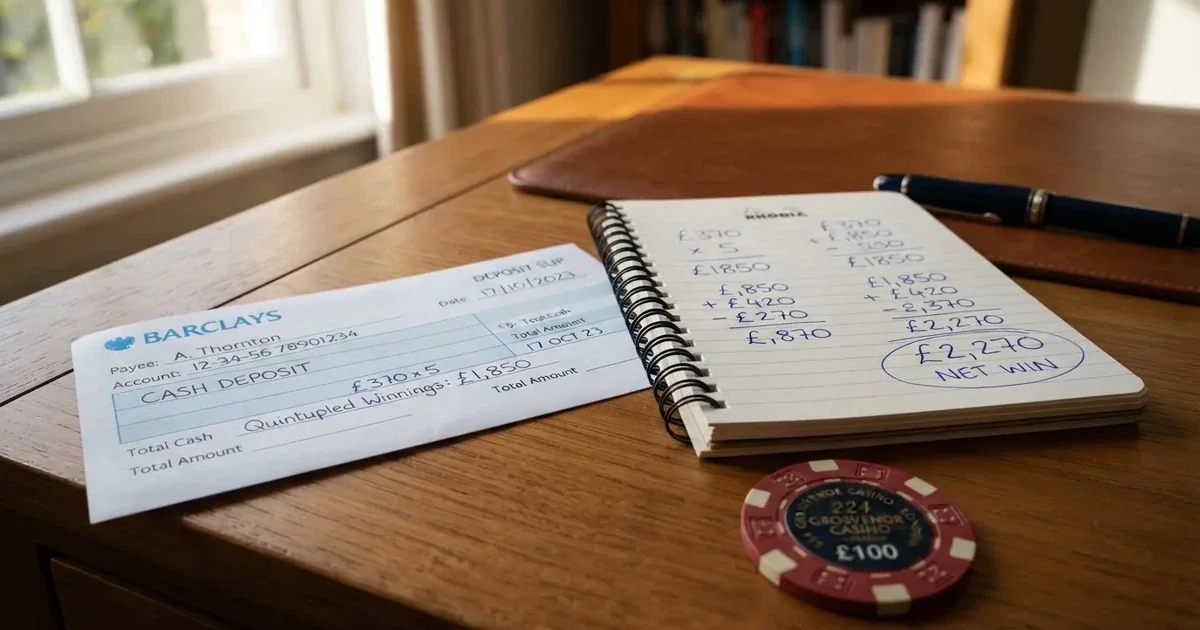
A 400% deposit match does one simple thing: it adds four pounds of bonus credit for every pound a player puts in, leaving them with five pounds of playable balance for each pound deposited. The offer sits at the loud end of the welcome-bonus market, and it has sat there for years, dressed in the same marketing language each time. What changes between offers — and what matters to anyone actually claiming one — is the cap on the bonus, the wagering requirement attached to it, and the payment method that triggers it. In the UK, all three now sit inside rules the Gambling Commission laid down between 2020 and the end of 2026, and the cost of clearing the bonus falls out of those rules more than it falls out of the offer itself.
This page is built around that cost. It walks through how a 400% match is funded, what the wagering multiple does to the balance once the bonus lands, which licensed brands the register lists, and what the jurisdiction around the offer looks like at the start of 2026. The featured set is drawn from the Gambling Commission’s public register, and the comparison is built from what the register records — licence holder, licence number, domain status — rather than from any operator’s own marketing, because the register is the only source that covers the field uniformly.
Table of Contents
- Funding the offer: the fundamentals
- The incentive: how a 400% match works and what it really costs
- The wagering turnover band at the 10x cap
- The licensed field: ten brands on the register
- Where the market stands on 400% bonuses
- The jurisdiction behind the offer
- Responsible play: the limits set before the bonus
- Frequently asked questions
Funding the offer: the fundamentals
A 400% bonus only lands when a qualifying deposit lands first. The deposit has to clear, has to be made through a method the operator counts as eligible, and has to meet the minimum the bonus terms state. None of that is set by the Gambling Commission; the operator picks the floor and the qualifying list. The rules the Commission does set sit one level up: they determine which payment methods may reach a UK-licensed site at all, and which methods have been carved out of the gambling market entirely.
What the credit card ban closed off
Since 14 April 2020, no UK-licensed operator may accept a credit card for gambling — online, in a betting shop, anywhere. The ban covers credit cards routed through an e-wallet as well: a player cannot load a credit-funded balance into a wallet and then spend it on the site, because the operator is the one accepting the funds and the rule binds the operator. Debit cards and bank transfers were never caught by the rule. The Commission’s reasoning, set out in the 2020 consultation, was partly about the 800,000 or so UK consumers who used credit to gamble in 2018, and partly about the 22% share of online credit-card gamblers who scored as problem gamblers in the Commission’s own data — a figure high enough that the product itself was treated as a risk factor rather than a payment option.
For a 400% bonus, the practical effect is small. Players were never likely to fund a casino bonus with a credit card once they read the terms; the offer was always meant to be played through. The ban simply closes a route that the maths already closed.
Apple Pay and the wider debit-card surface
Apple Pay sits on top of a debit or credit card, and it is the underlying card the bank approves, not the wallet, that matters at a UK casino. A debit card loaded into Apple Pay works the way a debit card does anywhere else: the deposit clears, the bank sees a gambling merchant, the operator sees a debit-card transaction. A credit card loaded into Apple Pay is still a credit card for the purposes of the Gambling Commission’s ban, and the deposit will be refused. Apple Pay itself launched on 20 October 2014 with US-issued cards only, accepted UK-issued cards from 14 July 2015, and uses tokenisation to replace the real card number with a device-specific token per transaction — so the merchant, including a casino, never sees the card’s primary account number. None of that changes the Commission’s rule. The card behind the wallet is what counts.
AstroPay and the prepaid route
AstroPay is a global digital wallet that began in Uruguay in 2009 and now operates through locally regulated entities in several markets. The UK entity is Larstal Limited, an electronic money institution authorised by the Financial Conduct Authority under the Electronic Money Regulations 2011. A player funding a casino through AstroPay is, for the operator’s purposes, paying through an e-money account rather than a card. Whether the AstroPay balance itself was loaded from a credit card is the open question; the Commission’s ban is enforced at the operator end, and the operator is responsible for checking the funding source, not the wallet. For most players, AstroPay means a prepaid or debit-funded route that lands cleanly on a UK-licensed site.
Bank transfers and the Faster Payments rails
Bank transfers within the UK move through the Faster Payments Service, launched in 2008 and run by Pay.UK. The service is open twenty-four hours a day, seven days a week, and most transfers land instantly or within a couple of minutes; the scheme itself sets a £1,000,000 per-transaction limit, though individual banks frequently impose much lower customer-level limits. For a casino deposit, Faster Payments is the cleanest route by a distance: the money moves directly from a UK bank account to the operator, there is no card network in the middle, and the credit-card ban never engages. A player who wants the bonus credited without delay generally ends up here, and the only friction is whatever the player’s own bank applies to gambling transactions.
Paysafecard, prepaid vouchers and the player’s own spending limit
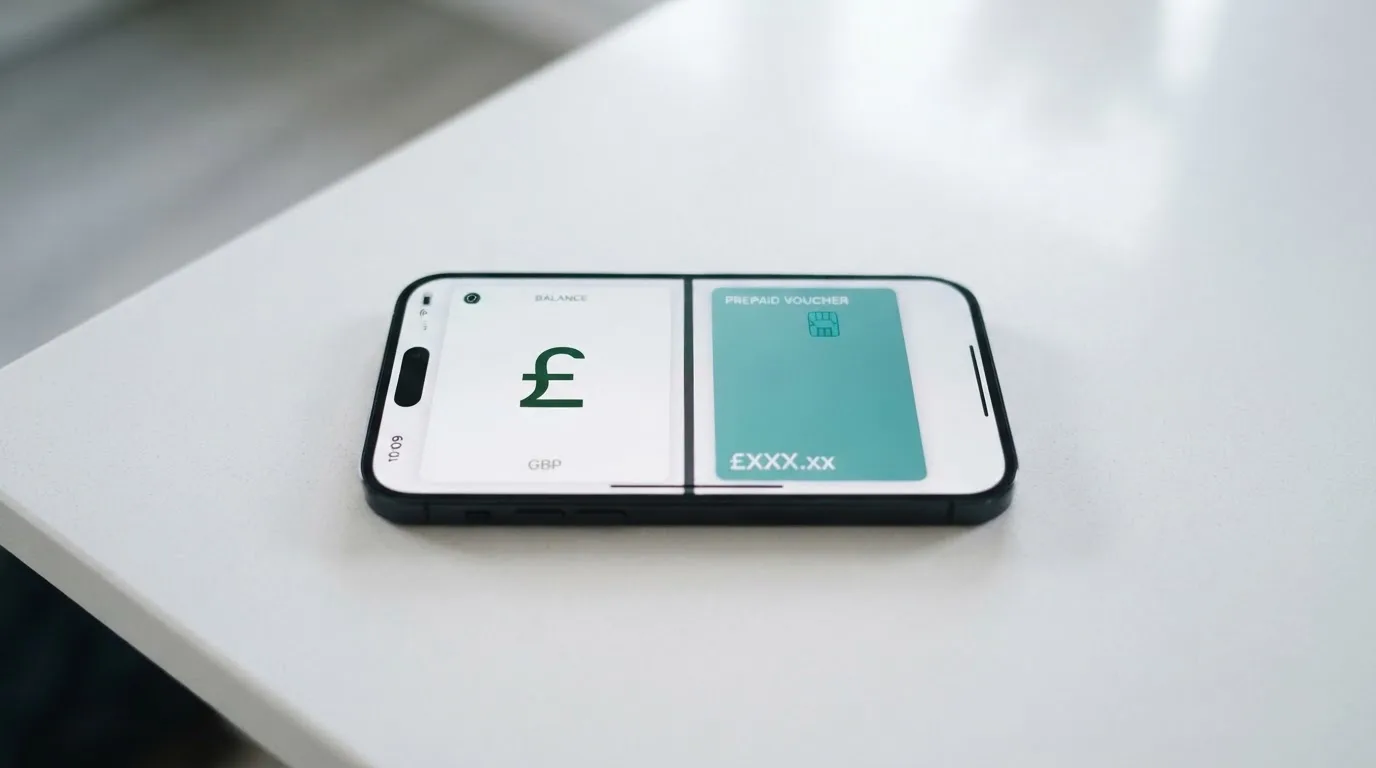
Paysafecard is a prepaid voucher that can be bought in a shop and redeemed online without a bank account or card being involved. The Gambling Commission treats paysafecard-funded play the same way it treats any other play for regulatory purposes: the operator must verify the customer’s identity before the first deposit and any play, GAMSTOP screening runs regardless of payment method, and the same financial-vulnerability trigger at £150 net deposits in a rolling thirty days applies. From the player’s point of view, though, paysafecard does something else — it imposes a hard spending ceiling that the player sets for themselves, in advance, by the value of the voucher they buy. That makes it the closest thing the market has to a forced deposit limit. A player choosing to fund a 400% bonus through paysafecard is, by construction, deciding how much of the offer they want to expose themselves to before the bonus terms even appear on screen.
Crypto, and the gap in the register
Cryptocurrency is not, at present, a funding route that the licensed UK market accepts. The Commission’s rules require identity verification before the first deposit, full source-of-funds checks at the financial-vulnerability trigger, and participation in GAMSTOP — all of which assume a regulated payment system with a counterparty the operator can speak to. Crypto sits outside that frame, and the brands listed on the public register are not, on the register’s own evidence, accepting it for casino play. Crypto-funded 400% bonuses do exist; they exist at operators licensed outside Great Britain, where the consumer protections the Commission enforces do not apply, and the player on them has no recourse through GAMSTOP, no ADR route, and no Commission complaints channel. That is the trade the crypto offer asks for, and it sits outside what this page’s featured set covers.
The incentive: how a 400% match works and what it really costs
A 400% match is, on paper, the most generous welcome offer in the regular UK market. The mechanic is straightforward. A player deposits £X. The operator credits a bonus of 4X. The player now has 5X to play with — five pounds of balance for every pound they put in. The offer is usually capped at a maximum bonus of somewhere between £50 and £400, with the maximum deposit needed to hit the cap sitting between £12.50 and £100. Almost every 400% match also carries a wagering requirement, an expiry window, and a list of games that contribute to clearing the bonus at different rates.
What “match” actually pays
The five-times balance is the headline. The headline is also where the offer’s economics start. A £25 deposit that lands a £100 bonus gives the player £125 of playable balance. Of that, £25 is the player’s own money, £100 is the operator’s. Anything the player wins from the bonus balance belongs to the player once the wagering requirement is cleared; anything they lose comes out of the operator’s £100 first and the player’s £25 last. That is the real shape of the deal — the player is gambling against the operator’s money for as long as the bonus balance lasts.
The wagering requirement and what it does to the balance
Since 19 December 2025, no UK-licensed operator may set a wagering requirement above 10x on a casino bonus. The cap sits on the requirement itself, not on the offer: an operator can still run a 400% match, can still cap the bonus at the level they choose, but the multiple they apply to the bonus is fixed at ten or below. A 50x wagering requirement on a casino bonus — once the standard offer in offshore markets — is no longer lawful for a British player.
That changes the cost of clearing a 400% bonus dramatically. Under the old market, a £100 bonus with a 50x requirement meant £5,000 of qualifying turnover before the bonus converted to withdrawable cash. Under the 10x cap, the same £100 bonus needs £1,000 of qualifying turnover. The bonus itself did not get more generous; the rules around it got stricter, and the player got a much shorter path through it.
Game contribution and the slots tilt
Almost every casino bonus applies different wagering contributions to different games. Slots typically contribute 100% — every £1 staked counts as £1 of qualifying turnover. Table games, live dealer games and most video poker variants contribute a fraction of that, sometimes 10% or 20%, sometimes nothing at all. A 400% bonus is, in practice, a slots bonus. The contribution rules tilt the clearing path toward reel-based games, and a player who tries to clear the wagering on blackjack will end up running ten times the required turnover for the same progress.
The slots tilt matters because of the game-cycle stake limits the Commission also enforces. Since 9 April 2025, players aged 25 and over have been limited to a £5 maximum stake per game cycle on online slots. Since 21 May 2025, players aged 18 to 24 have been limited to £2 per game cycle. The wagering contribution only counts stakes the player is legally allowed to make, and any stake above the limit does not advance the wagering — the operator is required to refuse it. Combined with the 2.5-second minimum interval between spins and the ban on auto-play since 31 October 2021, the practical speed at which a bonus clears has a ceiling the bonus terms alone no longer set.
The expiry window
A 400% bonus typically expires somewhere between 7 and 30 days after it is credited, with 14 days a common middle setting. The expiry is a hard cut-off: any bonus balance remaining when the window closes is forfeit, and any wagering progress that has not converted to withdrawable cash by that point is lost with it. A player who cannot reasonably commit the time the bonus requires should think twice before claiming — a £100 bonus that needs £1,000 of turnover at a £5 stake per spin is two hundred qualifying spins, each spaced at least 2.5 seconds apart, which works out to a minimum of about 8.3 minutes of pure spin time before any game selection, any losses and any non-qualifying bets.
What the marketing language hides
The “quintuple your balance” line is the marketing word for what the bonus does. The honest reading is: a player is being offered a temporary larger balance, attached to a wagering requirement that has to be cleared before the bonus money becomes theirs, on a slot game the regulator has capped stake-by-stake and spin-by-spin. None of those constraints is hidden in the terms — every UK-licensed operator publishes them — but the headline of the offer is the five-times number, and the headline is what the player sees first.
The wagering turnover band at the 10x cap
The arithmetic of a 400% bonus under the post-19 December 2025 rules is short. The bonus is four times the deposit. The wagering requirement is capped at 10x the bonus. Qualifying turnover therefore equals forty times the deposit.
Worked across the deposit sizes a UK 400% offer typically accepts, the band looks like this. A £10 deposit lands a £40 bonus and needs £400 of qualifying turnover at the cap. A £25 deposit lands a £100 bonus and needs £1,000. A £50 deposit lands a £200 bonus and needs £2,000. A £100 deposit lands a £400 bonus and needs £4,000. A £200 deposit lands an £800 bonus and needs £8,000. Most 400% offers cap the bonus somewhere between £100 and £400, which means the realistic turnover band for the typical offer runs from £1,000 to £4,000 — every pound of bonus the player wants to convert costs ten pounds of qualifying play, with no operator discretion left on the multiple.
The condition that defines the band is the 10x cap itself, applied to the bonus amount only — which is the standard UK construction post-19 December 2025, and which is what every licensed operator in the featured set would have to use. The arithmetic does not include the deposit; the player’s £25 stays theirs throughout, and the turnover requirement runs against the £100 bonus alone. A player who clears the requirement has converted a £100 bonus into withdrawable cash; a player who does not, loses the bonus and keeps the deposit.
The number to carry away from this band is not the largest figure. It is the smallest. A player who takes a £25 deposit and clears the bonus has put £1,000 through qualifying slots, at stake sizes between £2 and £5 per spin depending on age, and has done so on a bankroll that never exceeded £125 at any one time. That is the cost the offer asks for, in pounds sterling, before any game outcome is taken into account.
The licensed field: ten brands on the register
Every brand in the featured set is taken from the Gambling Commission’s public register of gambling businesses. The register is the Commission’s authoritative list of who is licensed to operate, and each entry ties a domain to a licence account, an operating company, and a remote casino operating licence number. The featured set is not a ranking and is not a recommendation; it is the slice of the UK-licensed market that the page is built around, drawn so that the comparison below it covers operators rather than offers.
What the page can and cannot say about a 400% bonus at each of these brands is a separate question. The Commission’s register records the licence, not the bonus; it does not list current promotional terms, does not confirm whether a brand is running a 400% match at any given moment, and does not record the minimum deposit, the cap, or the wagering requirement of any specific offer. Across the featured set, no entry on the register confirms a 400% bonus at the named brand. The register’s silence on the subject is what the register carries, and the operator reviews below keep that silence visible rather than filling it with guesswork.
The table sets out the four matters the register records: the brand, the licence holder and remote casino licence number, the domain’s status on the register (active or white-label), and whether the register offers any evidence of 400% bonus support. The fourth column is honest about its content: every row carries a dash, because the register is silent on the subject and the page has no second source to draw on.
| Brand | Licence holder and GB remote casino licence | Domain status on the register | 400% bonus support on the register |
|---|---|---|---|
| BetVictor | BV Gaming Limited · 039576-R-319370-028 | Active | — |
| Betfair | PPB Games Limited · 039411-R-319335-010 | Active | — |
| kwiff | Eaton Gate Gaming Limited · 044448-R-323408-017 | Active | — |
| Ladbrokes | LC International Limited · 054743-R-330863-014 | Active | — |
| Virgin Games | Gamesys Operations Limited · 038905-R-319430-022 | White Label | — |
| Betway | Betway Limited · 039372-R-319367-029 | Active | — |
| Jackpotjoy | Gamesys Operations Limited · 038905-R-319430-022 | Active | — |
| Betfred | Petfre (Gibraltar) Limited · 039544-R-319290-010 | Active | — |
| Sky Vegas | Bonne Terre Gaming Limited · 065519-R-339675-002 | Active | — |
| 888casino | 888 UK Limited · 039028-R-319297-014 | Active | — |
The table is the register’s view of the field. The reviews below it are the page’s view of what that licence status means for a player approaching a 400% bonus, and what each operator’s place in the register says about the offer even though the register does not list the offer itself.
BetVictor
BetVictor runs under BV Gaming Limited, account 39576 on the Commission’s register, holding remote casino operating licence 039576-R-319370-028. The domain Betvictor.com is listed as active. BV Gaming is a long-established operator on the UK market and runs several brands under the same licence account, which means the compliance infrastructure behind a 400% bonus — the GAMSTOP integration, the source-of-funds checks, the age and identity verification — is built on top of a setup that has been live for years rather than months.
The licence confirms BetVictor is a lawful place to play at; it does not confirm that BetVictor is currently running a 400% match. A player drawn to the brand for that offer needs to check the operator’s own promotional page rather than the register, and should read the bonus terms for the wagering structure, the game contribution table and the expiry window before claiming.
Betfair
Betfair is held by PPB Games Limited, account 39411, under remote casino operating licence 039411-R-319335-010, and is listed as active. PPB Games also runs the wider Paddy Power Betfair group’s UK-facing gaming brands, and the licence account is one of the older ones on the register. The same 10x wagering cap that applies to every UK-licensed bonus applies here, and the same financial-vulnerability trigger at £150 in net deposits over thirty days sits underneath it.
A player approaching Betfair for a 400% bonus is, in practice, approaching a brand whose parent group has been setting UK bonus terms for the better part of two decades. The heritage does not change the offer; it changes the operator’s familiarity with the rules that wrap the offer. On the offer itself, the register is silent.
kwiff
Kwiff is the youngest licence holder in the featured set by account number, held by Eaton Gate Gaming Limited, account 44448, under remote casino operating licence 044448-R-323408-017, with Kwiff.com listed as active. A newer account number does not mean a weaker operator, but it does mean a shorter paper trail on the Commission’s register and a smaller body of public complaint data to draw on. The compliance footprint — GAMSTOP, age verification, the 10x cap — is the same as for any other UK-licensed brand.
A player considering kwiff for a 400% bonus should weigh the shorter licence history against the same offer terms any UK-licensed brand would run. The offer is governed by rules the operator cannot choose; the operator’s own record is the variable.
Ladbrokes
Ladbrokes sits under LC International Limited, account 54743, holding remote casino operating licence 054743-R-330863-014, with Ladbrokes.com listed as active. LC International is the umbrella operator for a wider UK-facing group that also runs Coral and Gala Bingo under the same licence account — three brand names, one licence holder, one regulatory file. The Commission treats them as a single licensed entity, which means a player moving between Ladbrokes and Coral is not moving between operators for compliance purposes.
A 400% bonus at Ladbrokes is, on the register’s evidence, the same compliance file as a 400% bonus at any sister brand on the same licence. The offer itself is brand-level and varies; the rules around it are not.
Virgin Games
Virgin Games is listed as a white-label domain of Gamesys Operations Limited, account 38905, under remote casino operating licence 038905-R-319430-022. A white-label site trades under another company’s licence — Gamesys is the licence holder here, not a Virgin entity — and the Commission’s register marks the domain accordingly. For a player, the practical consequence is that complaints, self-exclusion requests and dispute resolution all route through Gamesys as the licensed operator.
A 400% bonus at Virgin Games is, in regulatory terms, a Gamesys offer on a Gamesys licence. The brand name on the page is one thing; the licence behind the page is another, and that is the relationship the register records.
Betway
Betway runs under Betway Limited, account 39372, holding remote casino operating licence 039372-R-319367-029, with Betway.com listed as active. The Betway group is one of the more recognisable names in the UK online market, and the licence account carries the same compliance obligations as any other. The 10x wagering cap binds any bonus Betway chooses to offer, and the same source-of-funds and identity checks apply before the bonus can be claimed.
A player approaching Betway for a 400% bonus is approaching a brand whose compliance file is well-established. The register’s silence on the offer is not, in this case, the register’s uncertainty about the operator; it is the register’s silence on bonuses as a category.
Jackpotjoy
Jackpotjoy shares its licence with Virgin Games: both domains sit under Gamesys Operations Limited, account 38905, holding remote casino operating licence 038905-R-319430-022. Jackpotjoy.com is listed as an active domain, while Virgin Games is listed as white-label — the same licence, different relationships to it. For a player, the relevant fact is that Jackpotjoy and Virgin Games are not separate operators for compliance purposes. They are two faces of one licence file.
A 400% bonus at Jackpotjoy is a Gamesys offer on a Gamesys licence, exactly as at Virgin Games. The two brands may run different promotions at any moment; the rules around any promotion they do run are identical.
Betfred
Betfred sits under Petfre (Gibraltar) Limited, account 39544, holding remote casino operating licence 039544-R-319290-010, with Betfred.com listed as active. The Gibraltar-registered operating company is common among UK-licensed online brands and is unremarkable on its own — the licence that matters is the Commission’s, not the company’s place of incorporation. The 2014 Gambling (Licensing and Advertising) Act ended the era when a Gibraltar licence was enough to take British customers; since then, every operator taking play from Great Britain needs the Commission’s permission regardless of where it is based.
A 400% bonus at Betfred is offered by a Gibraltar-registered company under a UK licence. The licence is the binding constraint; the registration is administrative detail.
Sky Vegas
Sky Vegas is held by Bonne Terre Gaming Limited, account 65519 — the highest account number in the featured set — under remote casino operating licence 065519-R-339675-002, with Sky Vegas listed as active. Like kwiff, Sky Vegas carries a newer account number on the register, and the same caveat applies: a newer account is not a weaker operator, but it is a shorter record. The 10x wagering cap, GAMSTOP screening and identity verification are the same obligations as anywhere else.
A player weighing Sky Vegas for a 400% bonus is weighing a newer licence file against the same offer rules any UK brand must follow. The offer’s compliance is fixed; the operator’s track record is the moving part.
888casino
888casino runs under 888 UK Limited, account 39028, holding remote casino operating licence 039028-R-319297-014, with 888casino listed as active. The 888 group has been one of the larger names in the UK online market for years, and the UK Limited entity has held the Commission’s licence continuously through multiple regulatory cycles. The same 10x wagering cap applies; the same source-of-funds framework; the same GAMSTOP integration.
A 400% bonus at 888casino is offered by an operator with a long, well-documented UK licence file. The register confirms the licence. It does not confirm the offer, and that is the gap the player closes by checking the brand’s own promotional page.
Where the market stands on 400% bonuses
The 400% match is a real offer, but it is no longer the open-ended offer it was before 19 December 2025. Three forces have reshaped it. The first is the 10x wagering cap, which has compressed the time and turnover needed to clear a bonus — and which has also, by removing the 50x outliers, made the smaller bonuses harder to distinguish from each other on pure multiple. The second is the mixed-product bonus ban, which prevents the old “bet on sport, get casino spins” structure from being used to inflate the headline number of a casino offer. The third is the broader shift in the UK online market toward lower-headline, lower-wagering welcome packages, in which a 400% match is increasingly the exception rather than the baseline.
What this means for a player looking for a 400% offer in the current market is that the offer is more likely to be found at smaller operators running on tighter margins, and at offshore brands operating outside the Commission’s rules. The licensed UK market still has 400% matches, but the headline is no longer the only thing the offer carries. The 10x cap, the game-cycle stake limit, the financial-vulnerability check and the GAMSTOP screening now arrive with it, and the offer’s true cost is set by those constraints as much as by the bonus cap.
What the player should weigh before claiming
A 400% bonus looks like free money until the wagering requirement and the game-cycle stake limit are read together. A £100 bonus with a 10x requirement needs £1,000 of qualifying turnover at £5 stakes, which is two hundred qualifying spins spaced 2.5 seconds apart — about 8.3 minutes of mechanical spin time, before any selection of game, before any loss, before any contribution from a non-slot game that does not count at 100%. That is the smallest cost the offer asks of a player claiming it at the typical cap. The largest cost is set by the player’s own deposit: the bigger the deposit, the bigger the bonus, and the bigger the turnover required to clear it.
The honest question to ask before claiming a 400% match is not whether the bonus is generous. It is whether the player has the time to clear the wagering requirement before the bonus expires, the bankroll to absorb the variance over the qualifying turnover, and the patience to play only the slots that count at 100%. If any of those three is missing, the offer is the wrong offer, regardless of the five-times headline.
The jurisdiction behind the offer
A 400% bonus is only lawful for a British player when the operator offering it holds a remote casino operating licence from the Gambling Commission. The Commission’s public register is the test: every licence number on the register takes the form account-R-number-suffix, where the leading six digits repeat the licence holder’s account number and the R marks the licence as remote, covering online rather than premises-based gambling. The register can be searched online and downloaded in full as CSV or Excel files, which is how the featured set on this page was drawn — and which is the only authoritative source for whether a given brand holds a licence at all.

On 18 September 2026 the register listed 139 businesses holding an active remote casino operating licence, and its domain list held 1,065 active entries alongside 361 white-label domains — the latter being sites that trade under another company’s licence rather than holding their own. The Commission’s register is, in other words, a wide field, and the ten brands the page covers are a narrow slice of it.
What the Gambling Act covers
The Gambling Act 2005 covers Great Britain — England, Scotland and Wales — and is enforced by the Gambling Commission, which is sponsored by the Department for Culture, Media and Sport. Northern Ireland is regulated separately. Since the Gambling (Licensing and Advertising) Act 2014, any operator taking customers in Great Britain has needed a Commission licence regardless of where in the world the operator is based; a Curaçao, Maltese or Gibraltar licence is not a substitute. Providing gambling to people in Great Britain without a Commission licence is an offence under section 33 of the Act, and the Commission responds with cease-and-desist notices, search-engine delisting and referrals to payment processors and hosting providers — though it has no power to block at ISP level, and the player on an unlicensed site has no protection under the Commission’s rules.
What the rules require of a bonus
Three rules directly shape a 400% bonus in the current market. The 10x wagering cap, in force since 19 December 2025, sets the ceiling on how many times the bonus must be turned over before it converts to withdrawable cash. The ban on mixed-product bonuses prevents operators from offering casino bonus credit in return for sports betting activity, or vice versa — a 400% casino bonus must be a casino bonus, with the wagering contribution rules that already come with casino play. The identity and age verification requirement, in force since 7 May 2019, means no anonymous play at a licensed site: name, address and date of birth are verified before the first deposit or any play, and GAMSTOP screening runs as part of the same onboarding flow.
What the rules require of the slots
The game-cycle stake limits — £5 for players aged 25 and over from 9 April 2025, £2 for 18 to 24 from 21 May 2025 — apply to every spin at a UK-licensed casino. The 2.5-second minimum interval between spins and the ban on auto-play have been in force since 31 October 2021, and the ban on losses-disguised-as-wins sits in the same package. None of these rules was written with bonuses in mind, but each of them reshapes how a bonus can be cleared. A 400% offer that assumed a player could spin at £10 a pop and run hundreds of spins an hour through auto-play is offering something the licensed market no longer offers at all.
The offshore alternative
A 400% bonus funded in cryptocurrency, with a 50x wagering requirement, no GAMSTOP screening and no identity verification, is on the table at offshore operators right now. The player who takes it has opted out of the Commission’s protections — no ADR route, no complaints channel, no self-exclusion through GAMSTOP, and no source-of-funds check at the £150 net-deposit trigger. The Commission’s enforcement against offshore operators is real but limited: cease-and-desist notices, payment referrals and search-engine delisting are the available tools, and they do not reach every operator or every site. What the player loses is the protection; what they keep is the bonus. The trade is the player’s to make, and the page records it without recommending it.
Responsible play: the limits set before the bonus
A 400% bonus is a marketing offer. Responsible gaming rules are the constraints that run underneath every offer at a UK-licensed casino, and they apply whether the player claims a bonus or not. Two pieces of player-protection infrastructure matter directly to anyone holding a 400% bonus: the prompt to set a financial limit, and the GAMSTOP self-exclusion scheme.
The deposit limit prompt
Since 31 October 2025, every UK-licensed operator must prompt a customer to set a financial limit before the first deposit. There is no state-set ceiling on deposits or losses; the operator must offer the prompt, and the customer can set their own ceiling or decline to set one. The prompt is the operator’s first practical intervention, and it runs before any bonus is claimed. A player who has decided to claim a 400% match has, in regulatory terms, already passed the financial-limit prompt — and the limit they set (or did not set) shapes how much of the bonus they can ever reach.
The GAMSTOP screen
GAMSTOP is the national online self-exclusion scheme, and participation in it has been a mandatory condition of every online operating licence since 31 March 2020. The screen runs at registration, before the first deposit, and a player who has registered with GAMSTOP cannot claim a bonus or place a bet at any UK-licensed online operator for the duration of their self-exclusion. Self-exclusion periods are six months, one year or five years, and cannot be cancelled early. The screen is not a marketing check and not a soft prompt; it is a hard cut-off, and the operator is required to refuse play if the screen returns a match.
The financial vulnerability check
From 28 February 2025, operators have been required to run a financial vulnerability check at £150 net deposits in a rolling 30-day window, using public data only. The check looks at publicly available information — county court judgments, bankruptcy registers, similar — and is the Commission’s first move into the wider financial-risk assessment framework that has been announced but not yet brought into force. A player claiming a 400% bonus over several deposits is, in practical terms, the player most likely to trigger the check, because the bonus encourages larger and more frequent deposits than a non-bonus session would.
Where help is available
The National Gambling Helpline, run by GamCare, and GambleAware both provide information and support for players who feel their play is moving beyond what they intended. The helpline is free, confidential and available twenty-four hours a day. The Commission’s rules require operators to signpost these services on their sites and at the point of any responsible-gaming intervention; a player who has hit the financial-vulnerability trigger, set a deposit limit, or self-excluded through GAMSTOP will see the signposting as part of the same flow.
What the offer does not change
A 400% bonus does not relax any of the responsible-gaming rules. The deposit-limit prompt still runs. The GAMSTOP screen still runs. The financial-vulnerability check still triggers at £150 net deposits. The 2.5-second minimum spin interval still applies. The £5 stake limit for over-25s and £2 stake limit for 18 to 24-year-olds still binds. The offer is a marketing product layered on top of the same regulatory frame, and the frame does not bend to accommodate it.
Frequently asked questions
How does a 400% casino bonus actually work?
A 400% match adds four pounds of bonus credit for every pound deposited, leaving five pounds of playable balance per pound paid in. The bonus is capped at a maximum the operator sets, and a wagering requirement applies before the bonus converts to withdrawable cash. Under rules in force since 19 December 2025, that requirement is capped at 10x the bonus amount.
What is the typical cap on a 400% match offer?
Most 400% matches cap the bonus somewhere between £100 and £400, which means the qualifying deposit needed to hit the cap sits between £25 and £100. The page has no single figure for a market-wide cap, because each operator sets its own ceiling and the Commission’s register records licences, not promotional terms.
Can a 400% bonus be funded through paysafecard?
Yes, in principle — paysafecard is a payment method rather than a bonus type, and operators that accept it for casino deposits generally accept it as a qualifying deposit for a welcome offer. The hard limit a paysafecard imposes is the value of the voucher the player buys, which doubles as a pre-set spending cap before any bonus terms appear.
What wagering requirement applies to a 400% bonus under current UK rules?
Since 19 December 2025, wagering requirements on casino bonuses at UK-licensed operators are capped at 10x. A 10x requirement on a £100 bonus means £1,000 of qualifying turnover before the bonus converts; the same bonus under an older 50x multiple would have meant £5,000 of turnover. The cap binds every licensed operator.
Are crypto deposits accepted towards a 400% welcome bonus at a UK casino?
No licensed UK casino accepts cryptocurrency for casino play at present, because the Commission’s rules require identity verification, source-of-funds checks and GAMSTOP screening that the licensed crypto market does not fit. Crypto-funded 400% bonuses exist at offshore operators outside the Commission’s jurisdiction, where none of those protections apply.
Published by the welcomeoffersuk team.