
Best UK Online Casinos With High Cashback Bonus — £CY$$ Comparison
Best online casino with high cashback bonus in the UK for 2026: what the offer actually costs
Current as of 2 November 2026 and cross-checked against the Gambling Commission’s public register of licence holders and domains.
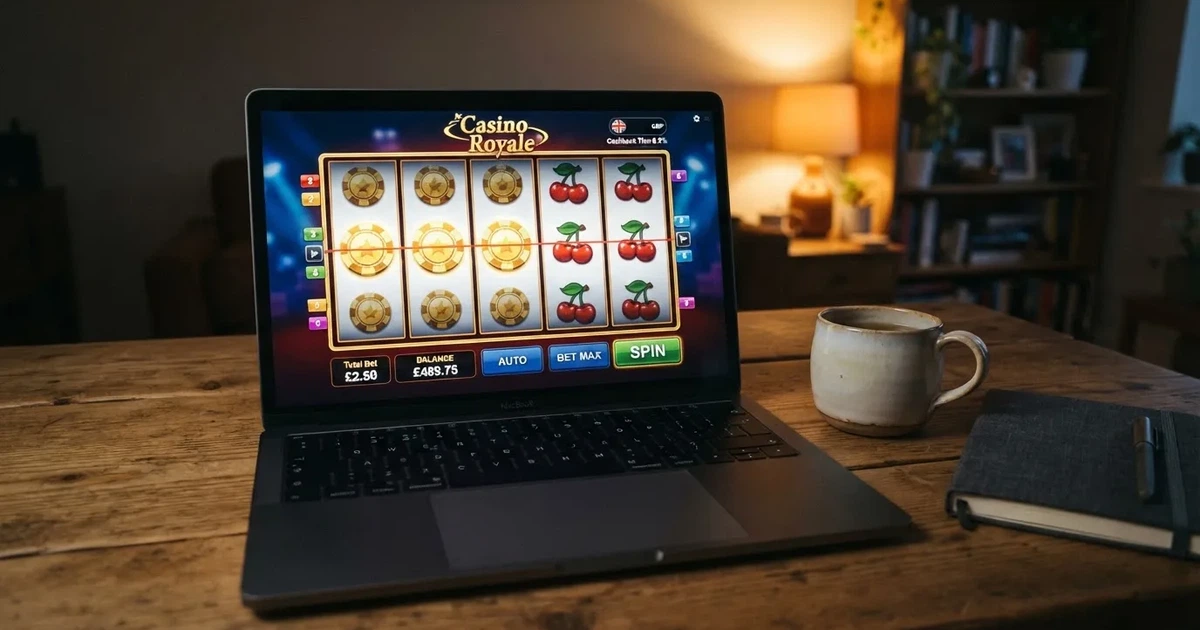
A “high cashback” headline rarely means what it says. The percentage is the easy half; the wagering multiple, the cap on withdrawable returns and the window in which a player must claim the rebate do most of the work. On a UK-licensed site the wagering half has been settled by the regulator since 19 December 2025, when the Gambling Commission capped casino wagering requirements at 10x the bonus amount and banned the mixed-product offers that used to blur the picture. The cap does not pick the offer for the reader — it only stops an offer from asking for more than that. What still varies is the percentage paid back, the basis on which it is calculated, whether it lands as cash or as bonus funds, and which games count toward the qualifying loss.
This page compares ten UK-licensed casinos on those terms, treating the cashback offer as something to be read closely rather than something to be claimed on faith. The angle is cost: what an offer really returns to a player who plays through it once, twice, or not at all.
Table of Contents
- Cashback in the UK crypto and low-friction funding context
- Payments and payout speed for a cashback offer
- How cashback bonuses are structured under the 10x cap
- The ten UK-licensed brands compared
- The wider UK online casino landscape in 2026
- The regulatory frame a UK-licensed cashback offer sits inside
- Responsible play around a cashback offer
- What the 10x wagering cap means in practice
- Frequently asked questions
Cashback in the UK crypto and low-friction funding context
Crypto casinos are sometimes promoted as the natural home of a cashback offer because the deposit leg can be settled without a card on file. That is partly true and partly a misreading. A Gambling Commission licensee must verify name, address and date of birth before the first deposit or any play, and that rule applies whether the deposit arrives as a pound, a euro or a token. Crypto-funded play on a UK-licensed site is verified UK-licensed play; the funding rail changes, the licence does not.

What low-friction funding does change is the speed at which a return can be requested. Where the original deposit landed through Faster Payments — a 24/7 UK scheme, most transfers arriving in seconds, with a £1,000,000 per-transaction ceiling that individual banks may set lower — the rebate leg of a cashback cycle can usually follow the same rail back. Apple Pay, launched in the United States on 20 October 2014 and extended to UK-issued cards on 14 July 2015, sits in a similar position for deposits and for the return leg where the operator supports it; tokenisation replaces the underlying card number with a device-specific DPAN, so the original card details never reach the casino. AstroPay, founded in Uruguay in 2009 and present in the UK through its FCA-authorised electronic money institution Larstal Limited, is another option some operators carry, though the wallet itself does not lift the verification step.
The credit card is the one funding rail that is firmly closed: the Gambling Commission banned the use of credit cards for any form of gambling in Great Britain from 14 April 2020, including credit cards routed through e-wallets. A player who arrived at a UK-licensed site on a debit card, a bank transfer or an accepted e-wallet will see those rails working in both directions; a player who arrived on credit will not have arrived at all.
For a cashback offer specifically, what matters is that the funding and the refund rails need to align. A weekly cashback paid back to a Visa debit card is one kind of offer; a cashback paid back to a wallet balance that must be re-played before withdrawal is another. The choice of rail is therefore not a side question — it is part of the offer.
Payments and payout speed for a cashback offer
Cashback lives or dies on the refund leg. A rebate that lands two days after the cycle closes is, in cash terms, a different offer from one that lands inside an hour, even before any percentage difference. Three mechanisms dominate how the refund leg moves on UK-licensed sites.

The first is Faster Payments, the UK scheme operated by Pay.UK since 2008, which runs 24 hours a day and clears most transfers in seconds. Where the original deposit was a UK bank transfer, a same-rail refund typically follows in well under two hours. The second is the card-network refund, which on a debit card usually clears within one to three working days and is the rail most retail-facing UK sites use. The third is the in-wallet refund, where the cashback is credited to the casino balance rather than withdrawn, and must often be played through a small multiplier before it can be moved — sometimes none, sometimes 1x, sometimes more.
The 10x wagering cap that took effect on 19 December 2025 governs cashback directly only where the offer carries a wagering requirement. Some UK-licensed sites pay their cashback as withdrawable cash with no play-through at all; others credit it as bonus funds that must be turned over ten times the bonus before withdrawal. The percentage alone does not tell the reader which kind of offer is in front of them — the small print does.
No-deposit variants follow a similar shape. A “cashback no-deposit” offer is a rebate on play the player funded themselves, so the no-deposit label usually refers to the fact that the cashback credit does not require an additional deposit to unlock; it does not mean the underlying play was free. A genuine no-deposit bonus, by contrast, is a small credit granted on registration or on completing verification, and tends to carry stricter terms because it carries the operator’s money rather than the player’s. Either way, the underlying rule is the same: a UK-licensed casino must verify the player before the first deposit or play, and the rebate is paid only into an account the casino has already confirmed.
One practical implication of the speed of the refund leg is that a player who wants cashback as cash, and not as bonus funds to be played again, should look for sites that credit the rebate withdrawable. A site that credits the rebate as bonus funds and then applies the 10x cap is asking for £1,000 of play for every £100 of cashback credited. At a typical slot RTP in the low-to-mid nineties, the expected cost of clearing that £1,000 of wagering is the £1,000 multiplied by the house edge — a measurable sum, not a rounding error, and a sum that turns a 10% rebate on £1,000 of losses into something considerably smaller than £100 in the hand.
How cashback bonuses are structured under the 10x cap
A cashback bonus is, at heart, a rebate on net losses over a defined window. The window is usually a calendar week, occasionally a day, occasionally a month; the percentage is the headline figure; the basis is what gets counted toward “losses”. The basis matters as much as the percentage. A rebate calculated on net losses across all casino play is one offer; a rebate calculated on slots only, or on slots and live casino but excluding table games, is another; a rebate that excludes bonus-funded play is a third.
Two structural points shape the UK cashback market today. First, the 10x wagering cap: since 19 December 2025, no UK-licensed casino can attach a wagering requirement higher than 10x the bonus amount to a casino offer, and mixed-product bonuses (such as a sports bet that unlocks casino spins) have been banned. Where a cashback offer carries wagering at all, the multiplier cannot exceed 10x. Second, the identity-verification floor: a Commission licensee has to confirm name, address and date of birth before any first deposit, which means a cashback paid into a brand-new account depends on the same checks a deposit would.
The wagering cap does not change which offers exist; it only stops them asking for more than ten times the credit. A reader who sees a 25% weekly cashback on net slot losses, with no wagering requirement attached, sees one kind of offer. A reader who sees the same headline percentage but a 10x wagering requirement attached sees a smaller real return, because some of the rebate will be paid back to the casino in expected house-edge losses during the wagering process. The percentage is not the offer; the percentage after the wagering cost is the offer.
The maximum cashable amount is another term worth reading. A 20% weekly cashback capped at £50 means a player who lost £500 in the qualifying window collects £50, and a player who lost £1,000 also collects £50. The cap does not make the offer worse than a higher-percentage uncapped offer — it makes it different, and a player who regularly clears the cap is being paid a flat sum rather than a true percentage. A player who rarely clears the cap is being paid the headline percentage and should compare on that basis.
Then there is the question of what gets refunded. A rebate on net losses is paid on what a player lost after wins — so a £1,000 session that ends £200 down refunds £40 at 20%, not £200. A rebate on turnover is paid on the amount staked regardless of outcome, and is rarer in the UK because it can cost the operator more than the headline percentage suggests. A rebate on losses excluding bonus play is a quieter restriction, and one that affects players who mix a welcome bonus with cashback in the same week.
The ten UK-licensed brands compared
The brands below are all listed on the Gambling Commission’s public register as active or white-label domains against a GB remote casino operating licence. None of them is named here as a place to play; the comparison is between what is verifiable about them on the register, and what the page’s research has been able to confirm about each one’s standing on the subject of this page. Where research carries no figure for a particular brand on a particular row, the row stays blank — the absence is itself a finding, because an offer this central to a brand’s pitch ought to be findable.
| Brand | Licence holder (GB remote casino licence) | Domain status | Cashback support |
|---|---|---|---|
| Virgin Games | Gamesys Operations Ltd | White-label | — |
| Betfred | Petfre (Gibraltar) Ltd | Active | — |
| Betfair | PPB Games Ltd | Active | — |
| Sky Vegas | Bonne Terre Gaming Ltd | Active | — |
| Gala Bingo | LC International Ltd | Active | — |
| 32Red | Platinum Gaming Ltd | Active | — |
| Casumo | Recro Ltd | Active | — |
| Midnite | Dribble Media Ltd | Active | — |
| PokerStars | Stars Interactive Ltd | Active | — |
| Jackpotjoy | Gamesys Operations Ltd | Active | — |
A note on the table: every operator here is in scope because the page is about UK-licensed casinos and these ten are. None is recommended; the page describes them. Where the subject of the page — the cashback offer — has a verifiable public term at a given brand, the page states it; where the term is not on the public record, the row stays empty. An empty row is not a verdict, but it does mean a player cannot compare on that basis before opening an account, which is the precise moment the comparison is most useful.
Virgin Games
Virgin Games runs as a white-label domain of Gamesys Operations Limited under the same licence that runs Jackpotjoy — both sit on account 38905, licence 038905-R-319430-022. A white-label site trades under another company’s licence rather than holding its own, which means the operational and compliance obligations are Gamesys’s, not Virgin’s; the player, however, signs up at the Virgin Games site and plays there. That is a structural fact rather than a quality judgement: it tells the reader where the regulatory accountability sits, which is the same place regardless of the brand on the page.
The cashback offer at Virgin Games is not surfaced in the public record this page consulted; the row sits empty for a reason. A reader who wants a defined weekly percentage, with a defined basis and a defined maximum, will need to look at the operator’s own promotion page once an account has been opened, since the terms in this market are set per-brand and per-cycle. That is true for almost every brand on this list, and is worth saying once at the table rather than ten times at the operator write-ups.
For a player who already has an account at one of the Gamesys sites, the practical move is to look at the current terms in the cashier or promotions tab before assuming Virgin Games and Jackpotjoy run identical offers — they share a licence, not necessarily a promotion.
Betfred
Betfred sits on its own licence: Petfre (Gibraltar) Limited holds account 39544, with the active remote casino operating licence 039544-R-319290-010. Betfred is one of the larger UK high-street bookmakers to have moved decisively into online casino, and the licence history here is long; the licence number itself is the way to verify the brand, because the URL alone is not — only the register can confirm that the site is what it says it is.
Betfred does not publish specific cashback terms on the public record. A player arriving here will not find the offer on the register; the terms live on the site. What the register does tell the reader is that the brand is licensed, that the licence is in force, and that the operator must therefore offer GAMSTOP enrolment, financial vulnerability checks at the published thresholds, and a deposit-limit prompt before the first deposit. Those obligations are not the cashback offer, but they are the floor on which any offer from this brand sits.
For a player who values a familiar UK-facing brand with a long-standing licence, Betfred is on the right side of the comparison; the cashback offer itself is not something this page can quote.
Betfair
Betfair runs under PPB Games Limited, account 39411, on the active remote casino licence 039411-R-319335-010. Betfair has long been known as an exchange and a sportsbook rather than primarily as a casino, and the casino vertical sits inside a wider gaming operation. The licence and the operational accountability are at PPB Games, which is the regulated entity; the brand is Betfair.
Betfair cashback details do not appear on the public register. The same caveat applies: a player who wants the current terms needs the operator’s own promotions page. What can be said here is that Betfair runs a regulated casino under the same Commission framework as everyone else on this list, with the same identity-verification obligations, the same GAMSTOP enrolment, and the same 10x wagering cap on any bonus it attaches.
Sky Vegas
Sky Vegas is operated by Bonne Terre Gaming Limited on account 65519, licence 065519-R-339675-002. Sky Vegas carries the brand weight of the Sky name without being part of Sky plc in the ownership sense; the operator is Bonne Terre Gaming, and that is the entity the Commission’s register lists. The casino product at Sky Vegas has been positioned as a slots-first product, and that orientation is part of why the cashback question is interesting here — slots-first products have, in this market, often attached cashback to slots play only.
Specific cashback terms for Sky Vegas do not appear on the public register. The empty row tells the reader only what the row can tell: the public register does not carry cashback terms, and any percentage or basis claim comes from the operator’s own page.
Gala Bingo
Gala Bingo runs under LC International Limited, account 54743, on licence 054743-R-330863-014. LC International is the same parent that runs Ladbrokes and Coral, which means three named brands sit under one licence account; the page never presents them as independent operators because they are not, in the regulatory sense. The bingo vertical is Gala Bingo’s core, with casino products running alongside.
Gala Bingo does not provide cashback details in the public record. A bingo-led product tends to run a different promotional structure from a slots-led product — bingo jackpots and ticket promotions rather than slot cashback — and the absence of a cashback figure on the public record is consistent with that orientation. A reader looking for cashback specifically is probably looking in the wrong vertical at this brand.
32Red
32Red sits on Platinum Gaming Limited, account 45322, licence 045322-R-324275-019. 32Red has long positioned itself as a higher-stakes, longer-tenure online casino with a strong live casino and table games offering, and the licence has been in place through several iterations of the Commission’s framework. The current remote casino licence number is the verifiable link between the brand the player sees and the operator the Commission regulates.
32Red cashback details are not present in the public record. The brand is licensed, the licence is active, and the row is empty for the same reason as elsewhere: cashback terms are set per-brand and per-cycle, and the public register does not carry them.
Casumo
Casumo runs under Recro Limited, account 61549, licence 061549-R-336718-002. Casumo is one of the longer-established non-UK-roots casino brands to have secured a GB remote licence, and the licence number is the way the Commission’s register links the brand to the operator behind it. The product mix at Casumo is broad — slots, live casino, jackpot games — and the promotional structure has historically been more varied than at single-vertical operators.
Casumo does not list a defined cashback percentage in the public record. The reader looking for a defined cashback percentage at Casumo will find it, if at all, in the operator’s own terms.
Midnite
Midnite is operated by Dribble Media Limited on account 42647, licence 042647-R-321653-022. Midnite entered the UK market with a sportsbook-led identity and a casino product running alongside it; the licence is in place, the register confirms it, and the operator sits inside the standard Commission obligations.
Midnite cashback terms do not appear on the public register. A reader looking for one will not find the terms on the register; they live on the operator’s own page. The same caveat applies as elsewhere on this list.
PokerStars
PokerStars runs as Pokerstars.uk under Stars Interactive Limited, account 39108, licence 039108-R-319334-026. The .uk domain is the UK-facing brand, separate from the older .com operation that targets other jurisdictions under different licences; the Commission’s register lists the .uk domain against the Stars Interactive licence, which is what a UK player signs up under.
PokerStars does not publish cashback details in the public record. PokerStars’ core is poker, and casino cashback is a secondary promotion if it is offered at all — the empty row reflects what the public record carries, which is the licence rather than the offer.
Jackpotjoy
Jackpotjoy runs under Gamesys Operations Limited, account 38905, licence 038905-R-319430-022 — the same licence as Virgin Games. Jackpotjoy is positioned around bingo and slots, with casino games running across the product, and the licence number is the same six digits as Virgin Games because the operator is the same.
Jackpotjoy does not list cashback details in the public record. The fact that Virgin Games and Jackpotjoy share a licence does not mean their cashback offers are identical; the operator can run different promotions on different domains, and the comparison the player wants is between the offers, not between the licences.
What the table does not show
The table shows licences and domain status because that is what the public record carries. It does not show cashback percentages, wagering multiples attached to cashback, maximum cashable amounts, qualifying windows, or game-weighting restrictions, because none of those terms is on the public record this page consulted. That is not a failure of the brands — those terms are set by the operators and published on their own pages — and it is not a failure of the register, which is a regulatory tool, not a promotional digest.
What the table does show, by leaving those cells empty, is that a player who wants to compare cashback offers cannot compare them without opening ten browser tabs. The page that follows this one in the reader’s session is, by design, the operator’s own.
The wider UK online casino landscape in 2026
The UK online casino market in 2026 is broad and crowded. The Gambling Commission’s public register listed 139 businesses holding an active remote casino operating licence on 18 September 2026, and the same register’s domain list held 1,065 active entries and a further 361 white-label entries on the same date.
| Register Figure (18 September 2026) | Count |
|---|---|
| Businesses holding an active remote casino operating licence | 139 |
| Active domain entries | 1,065 |
| White-label domain entries | 361 |
A white-label site trades under another company’s licence — the operator is someone else, the brand on the page is the one the player sees, and the Commission’s regulatory reach runs through the licence holder rather than through the brand owner. That is the structural feature that explains why Virgin Games and Jackpotjoy can both appear on the same licence while presenting themselves as different brands.
The breadth of the register does not translate into breadth of cashback offers. The market standard has converged under the 10x wagering cap that took effect on 19 December 2025: every offer a UK-licensed casino makes to a UK player must now sit inside that ceiling, and mixed-product offers that used to blur the line between sportsbook and casino have been removed from the menu. What has not converged is the percentage, the basis, or the cap, and on those three points the comparison between brands actually happens.
The reader looking at this market in 2026 is, in practice, choosing between offers that all sit inside the same regulatory frame. That frame is the floor; what each operator builds on it is the offer. The reader’s task is to compare the offers without confusing the frame for the offer, which is what this page is structured to make easier.
The regulatory frame a UK-licensed cashback offer sits inside
A cashback offer at a UK-licensed casino is not a private contract between the player and the brand; it is a contract that sits inside a regulatory frame, and the frame is the Gambling Commission’s. The Commission is sponsored by the Department for Culture, Media and Sport, and operates under the Gambling Act 2005, which covers Great Britain — England, Scotland and Wales — rather than Northern Ireland. Since the Gambling (Licensing and Advertising) Act 2014 any operator taking customers in Great Britain needs a Commission licence, regardless of where the operator is based; a Curaçao, Maltese or Gibraltar licence is not a substitute for a Commission licence, though a Commission licence may sit alongside another regulator’s authorisation. The Commission’s public register is the whole test of whether a brand holds a licence, and the licence number on the register is what links a brand to the legal entity behind it.
A remote casino licence number on the register has a recognisable shape: the leading six digits repeat the licence holder’s account number, the “R” marks a remote (online) licence, and the suffix indicates the current version. The number is not just a code; it is the link a player uses to confirm, on the Commission’s own site, that the brand they are signing up to is the brand the Commission regulates. A player who has not checked the register has not finished setting up an account, however complete the form looks.
Three limits sit on top of every offer. The first is the stake limit on online slots: £5 per game cycle for players aged 25 and over since 9 April 2025, and £2 per game cycle for 18-to-24-year-olds since 21 May 2025. The second is the 10x wagering cap on casino bonuses since 19 December 2025, which includes cashback offers that carry wagering at all. The third is the absence of a state-set deposit or loss ceiling: there is no statutory deposit cap, but operators must prompt a customer to set a financial limit before the first deposit, under a Commission requirement that took effect on 31 October 2025. A player who plays without setting a limit is choosing to play without one of the safeguards the regulator has put in place, and that choice is on them rather than on the operator.
Two further obligations shape what the offer looks like. Auto-play has been banned on slots since 31 October 2021, a slot spin may not be faster than 2.5 seconds, and “losses disguised as wins” — celebratory feedback on a spin that nets less than the stake — are banned. The first two mean a session cannot be sped up by automation; the third means the presentation of a session cannot flatter it. None of those rules is specifically about cashback, but all of them shape what a cashback offer at a UK-licensed casino looks like in practice.
The financial-vulnerability check is a more recent addition. From 28 February 2025, operators run a check at £150 of net deposits in a rolling 30-day window using public data only; the wider financial risk assessments the Commission has announced are not yet in force. The check is not a deposit block; it is a prompt for a conversation about play. A player who sees one should treat it as the regulator asking the right question at a meaningful threshold, and engage with it rather than close the tab.
A final point on the offshore question. Providing gambling to people in Great Britain without a Commission licence is an offence under section 33 of the Gambling Act 2005. The Commission disrupts illegal sites — cease-and-desist notices, search-engine delisting, payment and hosting referrals — but has no power to block sites at the ISP level, which means unlicensed sites do exist and do serve UK players. The penalty is not aimed at the player; the cost to the player is the absence of protection — no GAMSTOP, no Commission complaints route, no approved alternative dispute resolution. A cashback offer at an unlicensed site is not a Commission-supervised offer, whatever its percentage says. The offer’s promise is on the operator; the protection is on the regulator.
Responsible play around a cashback offer
A cashback offer is, by construction, a rebate on losses, and a rebate on losses is a structure that rewards continued play. The Commission’s responsible-gambling framework is the structure that bounds that reward, and three of its elements are worth reading carefully before any player signs up to a cashback promotion.
The first is GAMSTOP, the national online self-exclusion scheme, which has been a mandatory condition of every online licence since 31 March 2020. Self-exclusion periods run for six months, one year or five years, and cannot be cancelled early; a player who enrols is excluded from every UK-licensed online operator for the period, not from the one they enrolled at. A player who has enrolled and is still within their exclusion period is not eligible for any cashback offer at any UK-licensed site; the offer does not exist for them, regardless of the percentage.
The second is the operator-level deposit limit. There is no state-set deposit ceiling, but every UK-licensed operator must prompt a customer to set a financial limit before the first deposit. The prompt is not a recommendation; it is a precondition for funding the account, and a player who dismisses it is choosing to play without the only spending ceiling the regulatory frame gives them by default. A cashback offer does not exempt a player from that prompt; if anything, a rebate structure makes the prompt more important, because the rebate rewards the play that the limit is supposed to bound.
The third is the financial vulnerability check. At £150 of net deposits in a rolling 30-day window, the operator runs a public-data check; the check is not a refusal to take deposits, but it is a signal that the regulator has decided this is the level at which a conversation is warranted. A player who sees the prompt should answer it honestly; the alternative is a player who treats the prompt as noise, and the framework has no answer for that player.
Outside the regulatory frame, the National Gambling Helpline (run by GamCare) and GambleAware are the two signposted routes to help. GamCare runs the helpline; GambleAware funds treatment and research. Neither is the regulator, and neither is the operator; both are there for a player who has decided that a cashback offer is not what they want, and that what they want is to talk.
A note on the player’s own bookkeeping: a rebate is a rebate on losses, and the only way to know what a rebate is worth is to know what the losses were. A player who keeps a session log — date, time, deposit, withdrawal, net — can compute the actual return on a cashback offer in a way the offer’s headline percentage cannot. The headline is what was paid; the session log is what was paid on.
What the 10x wagering cap means in practice
The 10x wagering cap that took effect on 19 December 2025 is a ceiling on the multiplier a casino can attach to a bonus, not a floor on what the player is asked to do. The cap is the same for every UK-licensed operator; what the cap does not change is whether a given offer attaches a wagering requirement at all. A cashback offer that credits rebate as withdrawable cash with no play-through sits at zero. A cashback offer that credits rebate as bonus funds with a 10x multiplier sits at the cap. The two offers cannot be compared on percentage alone.
For an offer that does attach wagering, the cap sets a calculable bound. Under the cap, a £100 cashback credit requires £1,000 of qualifying wagering before withdrawal. At a slot RTP of 96%, the house edge is 4%, and the expected cost of clearing £1,000 of wagering at 96% RTP is £40. The £100 cashback credit, after a £40 expected clearing cost, returns £60 in expected value to a player who completes the wagering exactly once and withdraws. The headline percentage overstates the real return; the calculation tells the reader what the headline is worth after the regulator’s cap has done its work.
The calculation is a statistical estimate, not a guarantee. The £40 expected clearing cost is an average across many spins at the stated RTP; the actual cost in a single session can be lower or higher. The estimate tells the reader what the offer is worth in the long run, which is the only basis on which two offers can be compared. It promises no win, no payout, and no return.
The same calculation applies at any bonus amount: turnover is bonus multiplied by the wagering factor, and the cost of clearing is the turnover multiplied by the house edge. A £500 cashback with a 10x wagering requirement asks for £5,000 of wagering; at 96% RTP, the expected clearing cost is £200, leaving £300 of expected value on a £500 headline. The headline percentages look the same; the absolute numbers tell the reader which offer the wagering cost is doing more damage to.
Two caveats matter here. First, the 96% RTP used above is an example, not a market standard; slot RTPs in the UK market sit across a band, and an offer whose qualifying games carry a lower RTP will cost more to clear. Second, not all of the wagering requirement is necessarily at slots — a cashback offer that credits bonus funds and lets them be played on live casino or table games carries a different expected cost on the same turnover, because the house edge on those games varies. A reader who wants to compare offers on a like-for-like basis needs to know which games the wagering can be played on, not just the multiplier.
The 10x cap is a regulator-set ceiling, and it is the same ceiling for every brand on the comparison table. That uniformity is the point: the cap is the floor of the market, not the offer. What a brand builds on the floor — the percentage, the basis, the cap, the qualifying window — is the comparison the player actually makes.
Frequently asked questions
How is a casino cashback bonus usually calculated?
A casino cashback bonus is a percentage of net losses over a defined window — typically a calendar week — credited back to the player after the window closes. The percentage is the headline; the basis (slots only, all casino, excluding bonus play) and the maximum cashable amount are the terms that determine what the headline is actually worth.
Is weekly cashback paid automatically or does it need to be claimed?
It depends on the operator. Some UK-licensed casinos credit weekly cashback automatically once the qualifying window closes; others require the player to opt in or claim it from the promotions page before the cycle ends. A player who does not claim an opt-in offer before the window closes does not receive it, so the opt-in status matters.
Can a cashback bonus be funded through a crypto-based casino account?
The funding rail can be crypto on a UK-licensed casino that accepts it, but the operator must still verify the player’s name, address and date of birth before the first deposit or any play. Crypto-funded play on a Commission licensee is verified UK-licensed play; the rebate is paid back through the operator’s usual refund rail, which may or may not be crypto depending on the brand.
Does cashback come with its own wagering requirement?
Sometimes. Some UK-licensed casinos credit cashback as withdrawable cash with no wagering; others credit it as bonus funds with a wagering requirement that, since 19 December 2025, cannot exceed 10x the credit. A reader who wants cash, rather than bonus funds to be played again, should look for the first kind of offer rather than the second.
What makes a cashback site trustworthy compared with one that is not?
A trustworthy UK cashback site holds an active Gambling Commission remote casino licence, is verifiable on the Commission’s public register, takes part in GAMSTOP, and runs financial vulnerability checks at the regulator’s thresholds. A site that cannot be verified on the register is not supervised by the Commission, and a cashback offer on such a site is not a Commission-supervised offer, whatever its percentage says.
Is cashback offered as cash or as bonus funds with restrictions?
Both, depending on the operator and the specific promotion. Cash withdrawable offers and bonus-funds-with-wagering offers both exist on the UK-licensed market; the difference is in the small print, and the small print is what the reader needs to read before any claim is made.