
How phone-credit deposits work at mobile casinos in the UK — and what they really cost
 Available in GB
A check on the Gambling Commission’s public register of gambling businesses on 23 September 2026, against the register’s licence-holder and active-domain lists.
A phone-credit deposit at a mobile casino lets a player fund play without handing over a bank card, an e-wallet login or a bank transfer. The casino’s cashier routes the payment through a mobile carrier-billing provider, the provider charges it to the customer’s phone bill or pay-as-you-go credit, and the deposit lands in the casino balance within seconds. It is a fast and convenient way in. What it costs — in fees, in capped deposit sizes, in what it cannot do for withdrawals — is what the rest of this page covers.
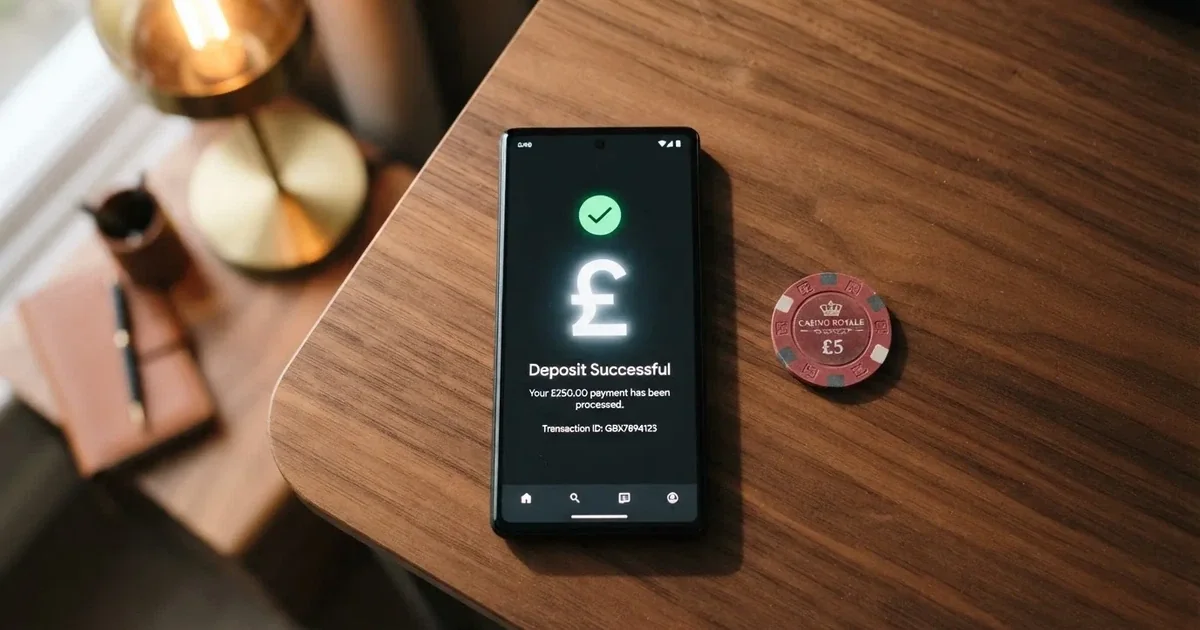
A best mobile casino pay with phone credit UK route is one way a player can avoid handing over a debit card at the cashier, opting instead to charge play to a phone account. The angle taken below is straightforward: every convenience in this market comes with a constraint beside it, and the constraint is what decides whether the convenience is worth taking.
Table of Contents
- The pay-by-phone market at a glance
- The legal frame: what a Gambling Commission licence actually buys
- Safer gambling around a phone-credit deposit
- How fast a phone-credit deposit settles, and what happens at withdrawal
- What it costs to fund play by phone credit
- How the ten reviewed operators stack up on licence and phone-credit support
- The ten reviewed operators in detail
- Reading the table against the rest of the page
- Frequently Asked Questions
The pay-by-phone market at a glance
What “pay by phone credit” means at a UK casino
The term covers two distinct routes that both end with the deposit charged to a mobile phone account. The older one is Payforit, the UK mobile-billing scheme that grew out of the SimPay consortium work begun in 2005 and launched in 2007; the bigger one, internationally, is Boku, the London-headquartered mobile carrier-billing company founded in 2009 that now operates in more than 90 countries and claims to support more than 200 local payment methods through a single API across more than 40 markets. At the cashier these rails look identical to the player: a deposit triggers an SMS or in-app prompt, the customer confirms, and the money is added to the casino balance. The difference is in the billing side and in which UK networks and merchants each rail has signed.

Underneath both sits the premium-rate phone-paid services regime that has regulated UK mobile-billed purchases since the early 2000s. Premium-rate numbers carry a two-part charge: an access charge set by the caller’s phone company, and a service charge set by the receiving organisation — capped between 7p per minute (084x numbers) and £3.60 per minute (09xx numbers). Premium-rate SMS shortcodes beginning with 72 are reserved in the UK for society lotteries. Day-to-day regulation of these services transferred from the Phone-paid Services Authority back to Ofcom on 1 February 2025.
How a deposit flows from a phone to a casino account
The mechanics are short. A player opens the casino’s deposit screen on a mobile browser or app, picks “Pay by Mobile” or a carrier-billing option, and types in the amount. The casino passes the request to a mobile-billing provider; the provider confirms the request with the customer’s mobile network; the network either adds the charge to the next phone bill or deducts it from the available airtime credit; the deposit appears in the casino balance within seconds. No card is read, no bank account is referenced, no card-number token is stored against the casino account.

The practical effect is that a phone-credit deposit is the smallest possible footprint in the cashier — a sum charged to a phone bill rather than a card or a wallet. That footprint is also what limits what the method can do: phone credit only flows in. Withdrawals cannot be paid back to a phone bill; the payout has to go to a bank account, a debit card or a wallet that the casino can verify in the player’s name.
Where phone credit sits beside cards, wallets and bank transfers
Phone credit is the lightest-touch deposit rail the UK cashier offers. Cards are the workhorse: a Visa or Mastercard debit card is accepted by every licensed UK online casino, and most accept the same card at withdrawal. Apple Pay, launched on 20 October 2014 and supporting UK-issued cards from 14 July 2015, sits beside the card: it tokenises the underlying card number into a device-specific Device Primary Account Number, generates a dynamic security code for each transaction, and uses NFC at the contactless terminal. At an online casino cashier Apple Pay functions as a card-token route rather than a wallet, and the same card deposit limits apply. AstroPay, the Uruguay-headquartered global digital wallet founded in 2009, offers online payments, virtual and physical debit cards, and peer-to-peer transfers — its UK entity Larstal Limited is authorised by the Financial Conduct Authority under the Electronic Money Regulations 2011, its Isle of Man entity AstroPay Global (IOM) Limited is licensed by the Isle of Man Financial Services Authority, and its Brazilian entity Astro Instituição de Pagamento Ltda is authorised by the Brazilian Central Bank as an electronic currency issuer. AstroPay spun off its payment-processing business, dLocal, as a separate company in 2016.
Bank transfers, including Faster Payments, are the slowest deposit route but the most flexible at withdrawal; cards and e-wallets sit in between on both speed and friction. Phone credit is at one end of that spread — quickest in, narrowest out.
Why phone credit appeals — and where it falls short
A phone-credit deposit never touches a card number. For a player who has chosen not to keep a card on file with a casino, or who would rather not have a gambling transaction show up on a bank statement at all, that is the appeal. A phone credit deposit does appear on the phone bill — premium-rate SMS confirmations are sent to the phone, and the charge appears on the next monthly statement or is deducted from pay-as-you-go credit at the time of the transaction. The deposit is also subject to the financial vulnerability check regime that the Gambling Commission has been rolling out since 28 February 2025 at the £150 net-deposit threshold (rolling 30 days).
Where it falls short is at withdrawal. Phone credit cannot receive a payout. A player depositing by phone has to register and verify a separate withdrawal destination — typically a UK bank account in the player’s own name — before any winnings can be paid out. The deposit-side convenience is paid for at the withdrawal end by exactly the same identity verification that a card or bank-transfer player goes through, with no time saved.
The legal frame: what a Gambling Commission licence actually buys
Who the regulator is, and what it licences
The Gambling Commission (the UKGC), sponsored by the Department for Culture, Media and Sport, regulates commercial gambling in Great Britain under the Gambling Act 2005. Great Britain, for the Act’s purposes, is England, Scotland and Wales — Northern Ireland sits under separate legislation. Online casino — remote casino — is a licensable activity, and the Commission issues two principal kinds of licence relevant to this page: an operating licence, which is what entitles a business to offer remote casino games to customers in Great Britain, and a personal management licence, held by the people running the licensed business. Every brand covered below holds an active remote casino operating licence on the Commission’s public register.
The Gambling (Licensing and Advertising) Act 2014 closed the route by which an overseas operator could serve British customers under a non-UK licence: since 2014, any operator taking customers in Great Britain has needed a Commission licence, regardless of where it is incorporated. A Curaçao, Maltese or Gibraltar licence is not a substitute. A remote casino licence number has the form (account number)-R-(licence number)-(suffix), where the leading six digits repeat the licence holder’s account number and the “R” marks a remote (online) licence — for example, bet365’s 055149-R-331499-004, where 55149 is Hillside (UK Gaming) ENC’s account number and “R” confirms it is the remote operating licence.
What the register actually shows
The Commission’s public register of gambling businesses is the whole test of whether a brand holds a licence. It is searchable online and downloadable in full as CSV or Excel files. The register lists each licence holder against its operating and personal licences, and against the websites (domains) that the licence holder runs. Each domain has a status of Active, Inactive or White Label — a white-label site trades under another company’s licence, which is the route by which Virgin Games, for example, runs under Gamesys Operations Limited’s account rather than its own.
On 18 September 2026 the register held 139 businesses with an active remote casino operating licence and 1,065 active domain entries alongside 361 white-label entries — a far larger licensed footprint than any single comparison can cover. The ten operators reviewed below are a sample of that footprint, not the whole of it.
What holding a licence obliges an operator to do
A Commission licence is not a marketing badge. It carries an obligation set spelled out in the Licensing Conditions and Codes of Practice (LCCP), the social responsibility code, and the Remote Technical Standards. Those obligations shape what a player sees in the cashier and at the safer-gambling pages:
- No anonymous play. The operator must verify the customer’s name, address and date of birth before the first deposit or any play. That requirement has been in force since 7 May 2019, and it is the reason a phone-credit deposit still sits behind a registered and verified account.
- No credit-card gambling. Credit cards have been banned for gambling since 14 April 2020, including credit-card funds routed through an e-wallet — a Visa debit is fine, a Visa credit is not.
- Slot stake limits. Online slots carry a maximum stake per game cycle: £5 for players aged 25 and over (from 9 April 2025) and £2 for players aged 18 to 24 (from 21 May 2025). The figure is per spin, not per session.
- No auto-play, minimum spin interval, no false wins. Auto-play has been banned since 31 October 2021; a slot spin may not complete faster than 2.5 seconds; losses disguised as wins (a “win” sound on a net-loss spin) are banned.
- Wagering-requirement cap and mixed-product bonus ban. Since 19 December 2025, wagering requirements on casino bonuses are capped at 10x and mixed-product bonuses — bet on sport, get casino spins — are banned. The bonus cost section below works through what that 10x ceiling does to a typical offer.
- Mandatory financial-limit prompt. Operators must prompt a customer to set a financial limit before the first deposit, in force from 31 October 2025. There is no state-set deposit ceiling; the prompt is the obligation, the limit itself is the player’s.
What the licence does not do
A Commission licence does not block a UK player from gambling on an unlicensed site. Section 33 of the Gambling Act 2005 makes it an offence to provide gambling to people in Great Britain without a licence, and the Commission disrupts illegal sites through cease-and-desist notices, search-engine delisting, payment and hosting referrals — but it has no power to order ISP-level blocking, and the offence is the operator’s, not the player’s. What an unlicensed site costs the player is the protection a licensed site offers: no GAMSTOP coverage, no Commission complaints route, no approved alternative dispute resolution (ADR). The convenience of phone credit is available on both licensed and unlicensed sites; the protection is not.
A Commission licence also does not collect gambling tax from the player. UK players pay no tax on gambling winnings; operators pay Remote Gaming Duty, raised from 21% to 40% from 1 April 2026. Players see the rate in the wider cost of running a licensed site, not on a winnings slip.
Safer gambling around a phone-credit deposit
The deposit limits a UK licensee must offer
The Commission does not set a default deposit ceiling. What it sets is the obligation to prompt — every customer must be asked to set a financial limit before the first deposit — and the obligation to honour the limits the customer sets thereafter. A £10-a-day phone-credit deposit capped by the player is as binding on the operator as any regulatory ceiling would be. The financial vulnerability check that runs at £150 net deposits in a rolling 30 days (from 28 February 2025) is a softer control: it uses public-data signals and is meant to surface customers whose deposit pattern suggests financial stress, without committing the operator to a hard block.
The statutory slot stake limits sit alongside the deposit limits, and they are the cleanest piece of consumer protection the deposit-limit framework sits on top of: at most £5 per spin for adults, at most £2 for 18- to 24-year-olds, no exceptions. A player who tries to stake £10 on a single spin at a licensed site will be refused by the game itself, not by the cashier.
GAMSTOP, GamCare and the wider safety net
GAMSTOP, the national online self-exclusion scheme, is a mandatory condition of every online licence since 31 March 2020. Self-exclusion periods are six months, one year or five years, and cannot be cancelled early. Every phone-credit deposit at a licensed site is checked against GAMSTOP before the deposit is accepted; a self-excluded customer does not reach the carrier-billing screen.
The free support services that sit beside GAMSTOP are the National Gambling Helpline, run by GamCare, and GambleAware, which funds treatment and research. The helpline and the charities operate alongside the operator’s own safer-gambling pages; a Commission-licensed operator must surface both prominently in its safer-gambling section.
Phone credit specifically — what makes it a safer-gambling concern
Phone credit is the deposit rail that turns a £10 spin into a £10 phone-bill charge that the customer sees a month later, or into a pay-as-you-go deduction at the moment of the spin. The lag is the issue: a pay-monthly customer who has set a £50-a-day deposit limit can spend it in three spins at 2.5 seconds each, and the bill arrives with the cumulative total rather than as it was incurred. The Commission’s response has been on the prompt and the deposit-limit side, not on the phone-credit rail itself — the rail is treated as a payment method, and the safety net sits on top of it. A player who wants the bill to arrive at the same speed as the spending should pay by debit card; a player who wants the smallest cashier footprint accepts the lag and sets the limit accordingly.
How fast a phone-credit deposit settles, and what happens at withdrawal
Deposit settlement
Phone credit is the fastest UK cashier rail. The deposit request is sent to the mobile-billing provider, the provider confirms with the carrier, and the deposit is added to the casino balance within seconds. There is no “pending” stage in normal operation; a declined request (a network timeout, a pay-as-you-go balance below the requested amount, a self-exclusion match against GAMSTOP) is shown at the cashier rather than being added and reversed. The Faster Payments service that a bank transfer routes through settles in under two hours in most cases; cards settle in under a minute at most licensed cashiers; phone credit is comparable to a card.
The exception is the financial vulnerability check for net deposits of £150 in a 30-day period, which can delay a single deposit while the operator runs a public-data check on the customer. The check is a one-off at the threshold rather than per-transaction, and it is the only routine intervention that adds time to a phone-credit deposit at a licensed site.
Withdrawal settlement — and the constraint no phone rail escapes
A phone bill cannot receive a payout. A player who deposits by phone credit has to register a withdrawal destination before any winnings leave the casino — almost always a UK bank account in the player’s own name, occasionally a debit card or an e-wallet that the casino has verified against the player’s verified name and address. The verification is the same KYC the deposit-side ID verification ran, and it is the reason a withdrawal at a Commission-licensed operator does not happen instantly even at the fastest cashier.
Realistic withdrawal times at UK-licensed casinos sit in the following bands, depending on the destination and the operator:
- UK bank account via Faster Payments: same-day to next banking day once the casino has approved the payout. Some operators run an internal pending period before approval.
- Visa or Mastercard debit: same-day to three banking days, with the upper end dominated by the operator’s pending period rather than the card network.
- PayPal and major e-wallets: same-day once approved, where the operator supports them.
- Bank transfer (CHAPS or international): one to three banking days after approval; the route a casino uses for larger payouts.
The phrase “instant withdrawal” that some marketing pages use is qualified by “once verified” and “once approved”. Verification happens once and stays on the account; approval is the casino’s pending period, which is internal to the operator and is the variable a player can compare between brands.
What that means for a phone-credit player specifically
A player who funds play by phone credit pays for the deposit convenience with extra friction at withdrawal. The extra friction is bounded: the registration and verification of a UK bank account is the same one-time setup a card or e-wallet user goes through, and once verified the payout speed is the same as for any other deposit method. The cost of phone credit as a deposit rail is therefore not withdrawal speed — it is the per-transaction cost ceiling, which the next section works through.
What it costs to fund play by phone credit
The 10x wagering cap and what it does to a bonus offer
The 10x wagering requirement cap that took effect on 19 December 2025 is the rule that determines what a bonus at a UK-licensed casino actually costs. Before the cap, wagering multiples of 30x, 40x, even 65x the bonus were standard; the cap means a £10 bonus now requires £100 of wagering to clear at most, rather than £300 to £650. That is a meaningful change for the size of the bonus a casino can offer at all, because the same multiplier caps the headline figure: a casino paying real money for a bonus has to size the bonus to the wagering it can profitably fund.
The mixed-product bonus ban — the rule that prevents a “bet on sport, get casino spins” style package — sits beside the cap. Bonuses at UK-licensed casinos are now single-product, cash or spins, and any wagering attached is capped at 10x.
The arithmetic the cap implies
The arithmetic behind a 10x cap is short. Assume a casino offers a £10 cash bonus with a 10x wagering requirement: required turnover is £10 × 10 = £100. At a £1 stake per spin (within the £5 statutory ceiling for adult play), that is 100 spins. A slot spin is bounded at no faster than 2.5 seconds under the Commission’s Remote Technical Standards, so 100 spins at that minimum interval is 250 seconds, or roughly 4 minutes of play. The arithmetic says nothing about how likely any one of those spins is to win — the bonus’s expected cost is a separate calculation — but it does say what the player has to do to clear the bonus.
Take a larger offer: a £50 bonus at the same 10x cap needs £500 of wagering, 500 spins at a £1 stake, and 1,250 seconds, or about 21 minutes of play. The shape is the same at every bonus size — turnover scales linearly with the bonus, time scales linearly with both. The Commission’s 2.5-second minimum spin interval is what bounds the time ceiling.
What this produces, in plain terms, is a band: a typical UK-licensed casino bonus in 2026 takes somewhere between a few minutes and half an hour of active play to clear, against turnover that runs from the low tens of pounds at the small end to several hundred pounds at the upper end. That band is narrower than the same calculation produced in 2023 or 2025, and the cap is the reason. The wider the headline bonus, the more the time ceiling bites.
Where the bonus cost actually sits
The 10x cap is a ceiling on how much wagering a casino can require; it is not a floor on the bonus’s value. A bonus’s value to the player is the expected cash it returns minus the expected loss during the wagering. The Commission’s stake limits cap the size of any single spin; the RTP of the slot caps the return; the wagering multiple caps the volume of play. A £10 bonus at a 10x cap on a 96% RTP slot produces an expected loss during wagering of £100 × (1 − 0.96) = £4, against a £10 face value. That is a 40% retention rate on the bonus for the player; the casino’s expected profit on the bonus is the £4 minus the £10 it paid out, which is negative until the bonus is small enough that the wagering covers the cost.
The arithmetic is the arithmetic. What it means is that a UK-licensed bonus in 2026 is a smaller headline figure with a shorter clearing path than the equivalent offer before the cap, and the cost of clearing it is bounded by both the 10x multiple and the slot’s RTP. A player who reads the small print will see the bonus in those terms — what it pays out, what it costs to clear, what the casino expects to keep — rather than as a headline.
How the ten reviewed operators stack up on licence and phone-credit support
The table below shows the ten reviewed brands on three points the register confirms: which licence holder runs the domain, the GB remote casino operating licence number, and whether the domain is listed on the register as Active or White Label. The fourth column — phone-credit support — is left as the no-data marker for every brand. The reason is straightforward: the register does not record deposit-method availability, and the reviewed operators’ own cashier pages were not part of the inputs the page is built on. A reader who wants to confirm phone-credit acceptance at a specific brand has to check that brand’s cashier directly; the table does not assert support where the inputs do not.
| Brand | Licence holder | GB remote casino licence | Domain status on the register | Phone-credit support |
|---|---|---|---|---|
| bet365 | Hillside (UK Gaming) ENC (account 55149) | 055149-R-331499-004 | Active | — |
| Betfred | Petfre (Gibraltar) Limited (account 39544) | 039544-R-319290-010 | Active | — |
| PokerStars | Stars Interactive Limited (account 39108) | 039108-R-319334-026 | Active | — |
| 32Red | Platinum Gaming Limited (account 45322) | 045322-R-324275-019 | Active | — |
| Virgin Games | Gamesys Operations Limited (account 38905) | 038905-R-319430-022 | White Label | — |
| William Hill | WHG (International) Limited (account 39225) | 039225-R-319373-015 | Active | — |
| Midnite | Dribble Media Limited (account 42647) | 042647-R-321653-022 | Active | — |
| Grosvenor Casinos | Rank Interactive (Gibraltar) Limited (account 57924) | 057924-R-334666-005 | Active | — |
| 888casino | 888 UK Limited (account 39028) | 039028-R-319297-014 | Active | — |
| kwiff | Eaton Gate Gaming Limited (account 44448) | 044448-R-323408-017 | Active | — |
The columns that repeat a value — Active dominates the Domain Status column — are kept in the table because the rows that deviate from that value carry the information. Virgin Games is the only white-label entry: it trades under Gamesys Operations Limited’s account rather than its own, which is the structural detail that explains why a player will see Gamesys rather than Virgin Games on the Commission’s licence-holder entry.
The ten reviewed operators in detail
The write-ups below cover the ten brands in the order the register sets them out. Each one closes on a verdict that reflects what the licence position and the deposit-method position mean for a player comparing options.
bet365
Bet365.com is listed on the Gambling Commission register as an active domain of account 55149, Hillside (UK Gaming) ENC, which holds the active remote casino operating licence 055149-R-331499-004. Hillside is the operating company; the licence number reflects the same account number as its six leading digits. The brand is one of the largest UK-licensed operators by active customer base, and the licence position is the cleanest possible on the register — single account, single operating company, no white-label layer. On phone-credit support, the inputs the page is built on do not record a yes or a no for bet365; a player who wants to confirm whether the bet365 cashier offers a mobile-billing rail has to check the cashier at the time of deposit. The verdict: the licence position is solid and the operating-company position is too, and the deposit-method position is the question this page cannot answer for the brand.
Betfred
Betfred.com appears on the official register with active status for account 39544, Petfre (Gibraltar) Limited, holding the active remote casino operating licence 039544-R-319290-010. The Gibraltar-incorporated operating company sits behind a UK Gambling Commission licence because the Gambling (Licensing and Advertising) Act 2014 requires any operator taking GB customers to hold a Commission licence wherever it is incorporated. The arrangement is one a UK player will meet at several major operators and is not, on its own, a yellow flag — what matters is the Commission’s continuing oversight, not the place of incorporation. We do not have information on whether carrier billing is accepted here. The verdict: the licence and oversight are in place; for payment availability, please refer to the operator’s site directly.
PokerStars
PokerStars.uk is officially registered with an active domain for account 39108, Stars Interactive Limited, holding the active remote casino operating licence 039108-R-319334-026. The .uk domain — rather than the older .com or .eu variants — is the Commission-mandated route for UK-facing traffic, and the licence has been renewed through several iterations of the same operating company. Stars Interactive sits inside a wider international group; the Commission licence is the entity that matters for UK players. Our data does not record whether this operator allows deposits by phone credit. The verdict: a long-running UK-licensed operation with a clean register position; payment options are best verified at the cashier.
32Red
32Red.com holds an active domain listing on the official register for account 45322, Platinum Gaming Limited, holding the active remote casino operating licence 045322-R-324275-019. The brand has held a Commission licence since the early 2010s and the operating-company structure has been stable across that period. The licence account number is the same one used across a small set of related brands; the reviewed entry here is 32Red specifically. Information on mobile-billing support is not available in the inputs for this brand. The verdict: a long-tenured licence on a stable operating-company structure; specific payment availability remains a detail to verify directly at the cashier.
Virgin Games
Virgingames.com is listed on the register as a white-label domain of account 38905, Gamesys Operations Limited, which holds the active remote casino operating licence 038905-R-319430-022. The white-label status is the relevant detail: Virgin Games does not hold its own licence, and Gamesys Operations Limited is the licence holder across a family of brands. A player who wants to check the licence behind Virgin Games has to look at Gamesys’s account, not Virgin’s. The arrangement is permitted and regulated; it is the same route several major UK-facing brands use, and the Commission’s domain list records it explicitly. We have no confirmation of mobile-billing support for this brand. The verdict: the white-label structure is a feature of the licence register, not a flag against the brand, and payment availability should be confirmed by checking the cashier at the time of deposit.
William Hill
Williamhill.com is found on the Gambling Commission’s register as an active domain of account 39225, WHG (International) Limited, holding the active remote casino operating licence 039225-R-319373-015. WHG (International) is the operating company behind William Hill’s online UK business; the high-street bookmaker operation sits under separate entities and a separate licence. The Commission’s remote licence is what the reviewed William Hill entry runs under. Input data does not specify whether this operator accepts carrier billing. The verdict: a familiar UK-facing brand with a long-standing licence; deposit methods are best confirmed by checking the cashier at the time of play.
Midnite
Midnite.com appears on the register of active domains for account 42647, Dribble Media Limited, holding the active remote casino operating licence 042647-R-321653-022. Midnite is a newer entrant to the UK online casino market than most of the reviewed set; the Commission account number is consistent with a licence issued in the early 2020s, and the licence has been renewed through the relevant iterations. The brand is small relative to the household names in the table but holds the same kind of licence and the same player protections. Specific payment availability for this operator is not recorded in our inputs. The verdict: a recent but clean licence entry on a smaller operating company; please verify the cashier options directly if phone credit is required.
Grosvenor Casinos
Grosvenorcasinos.com maintains an active domain entry on the register for account 57924, Rank Interactive (Gibraltar) Limited, holding the active remote casino operating licence 057924-R-334666-005. The brand sits alongside Grosvenor’s land-based casino estate; the online and offline operations run under separate licences and the reviewed entry here is the online casino licence only. Rank Interactive is the operating company behind several UK-facing brands; the reviewed entry here is Grosvenor Casinos specifically. Our inputs do not state whether this operator supports carrier billing. The verdict: a brand with a clear land-based heritage and a clean online licence position; deposit method availability is subject to change, so please check the cashier directly.
888casino
888casino is listed on the register as an active domain of account 39028, 888 UK Limited, holding the active remote casino operating licence 039028-R-319297-014. 888 UK Limited is a UK-incorporated operating company; the wider 888 group operates in several jurisdictions and the UK entity is the one relevant to a UK player. The Commission licence has been in place across the various iterations of the UK-facing brand. Information on whether this brand supports carrier-billing payments is not included in our data. The verdict: a UK-incorporated operating company behind a long-tenured UK licence; check the site cashier directly to confirm available deposit methods.
kwiff
Kwiff.com is listed on the register as an active domain of account 44448, Eaton Gate Gaming Limited, holding the active remote casino operating licence 044448-R-323408-017. The brand is a smaller and more recent entrant than most of the reviewed set; the Commission account number sits in the range that reflects a licence issued in the late 2010s or early 2020s. Eaton Gate Gaming is the operating company; the licence is active on the register. Phone-credit support is not recorded in the inputs for kwiff. The verdict: a smaller-scale UK-licensed operation with a recent licence, with the same deposit-method gap as the rest of the table.
Reading the table against the rest of the page
The ten entries above share a common shape: a Commission licence on the public register, an operating company behind it, and an unanswered question on phone-credit support. The common shape is the point — every reviewed brand sits inside the same regulatory frame, and the question a UK player has to answer at the cashier is the same at each one. What changes between brands is the operating company, the licence number, and the brand position in the wider market; what does not change is the obligation set the licence carries, the GAMSTOP coverage that goes with it, and the requirement to verify identity before the first deposit.
A player who wants phone-credit support at a specific brand has to confirm it at the cashier, since the register does not record deposit-method availability and the inputs this page is built on do not record it either. A player who wants the protection of a Commission licence, regardless of deposit method, can pick any of the ten entries and find it on the register.
Frequently Asked Questions
How does paying by phone credit work at a mobile casino?
A player picks a mobile-billing option at the casino cashier, enters the deposit amount, and confirms by SMS or in-app prompt. The mobile-billing provider — Payforit, Boku or a similar rail — bills the amount to the customer’s phone account, and the deposit lands in the casino balance within seconds. No card is read and no card number is stored. The phone account is charged either on the next monthly bill (pay-monthly) or at the time of the deposit (pay-as-you-go).
Is a pay-by-phone-credit deposit added straight to a phone bill?
It depends on the phone contract. A pay-monthly customer sees the charge on the next phone bill; a pay-as-you-go customer sees the charge deducted from available airtime at the time of the deposit. Either way the amount is debited to the mobile account, not to a bank card or a bank account. The deposit appears in the casino balance as soon as the mobile-billing provider confirms with the carrier.
Do UK-licensed casinos still run ID checks before a phone-credit deposit?
Yes. Every Commission-licensed operator has been required to verify name, address and date of birth before the first deposit or any play since 7 May 2019. The ID check is independent of the deposit method: a phone-credit deposit sits behind the same verified account as a card deposit, and a player who cannot pass verification cannot reach the cashier. The financial vulnerability check at £150 net deposits in a rolling 30 days is an additional control that runs on top of the standard ID verification.
Is there usually a limit on how much can be deposited by phone credit?
The mobile-billing rail itself imposes a per-transaction ceiling, typically £10 or £30 per deposit, set by the provider and the carrier rather than by the casino. On top of that, the player can set a financial limit at the casino — required to be prompted before the first deposit since 31 October 2025 — and the operator runs a financial vulnerability check for net deposits of £150 in a 30-day period. The slot stake limit of £5 per spin for adults, £2 for 18- to 24-year-olds, bounds the per-spin spend rather than the deposit.
How quickly does a phone-credit deposit reach a casino account?
Within seconds of confirmation. The deposit request is sent to the mobile-billing provider, the provider confirms with the carrier, and the deposit is added to the casino balance. There is no “pending” stage in normal operation. The exception is the financial vulnerability check mentioned earlier for net deposits of £150 over 30 days, which can delay a single deposit while the operator runs the check; the check is a one-off at the threshold rather than a per-transaction cost.
Can phone-credit deposits be reversed if made by mistake?
Not through the phone-billing rail. The deposit, once confirmed, is added to the casino balance and charged to the phone account. A mistaken deposit is treated by the casino under its standard deposit-reversal policy, which is governed by the Commission’s social responsibility code and ADR rules rather than by the payment method. The customer also has the phone-billing provider’s own complaints route; for premium-rate services the regulator is Ofcom from 1 February 2025 onwards.
Published by the welcomeoffersuk team.