
Online Casino Reload Bonus UK 2026 — Where the Real Cost Sits
Reload bonuses at UK online casinos: what the offer really costs the player who claims it
A reload bonus is the marketing word for a repeat-deposit incentive — money or spins added on top of a deposit you make after the welcome offer has already been spent. At a British-licensed casino the term still counts as a gambling promotion, so a 10x wagering cap has applied since 19 December 2025 and the offer only appears once age verification, GAMSTOP confirmation and the rest of the sign-up gate have cleared. This page reads those offers as a cost: how the cap reshapes what is on the table, which deposit routes a UK player can actually use to trigger one, and where the licensed brands reviewed below fit a returning player’s budget.
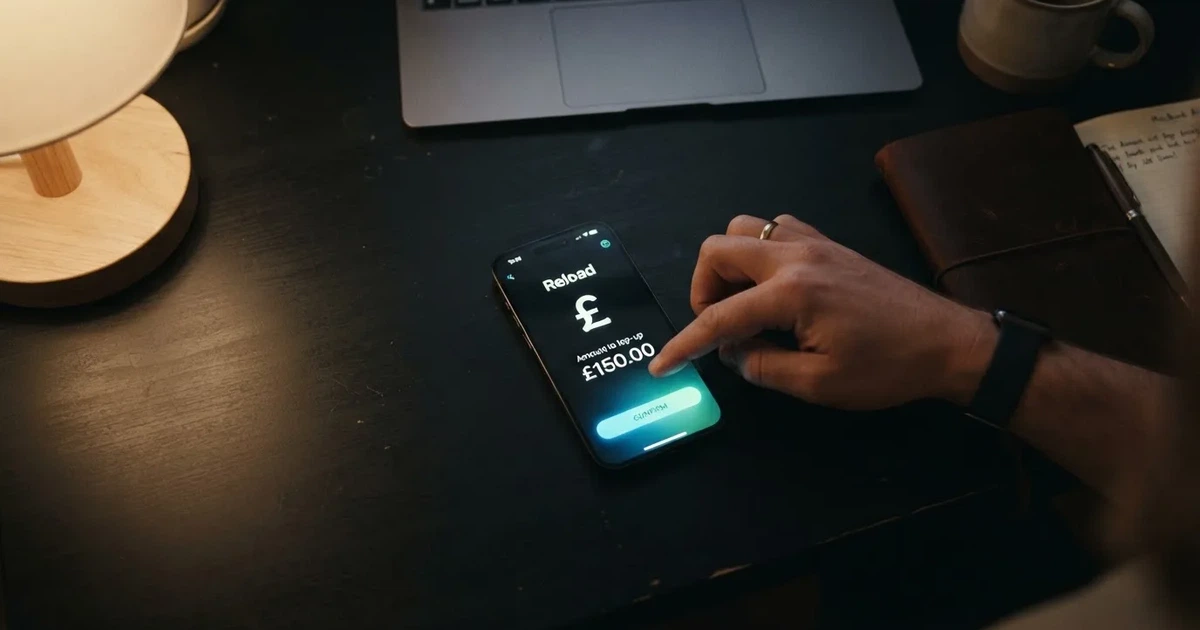
Data current as of 11 November 2026, checked against the Gambling Commission’s public register of gambling businesses.
Table of Contents
- The shape of a reload offer and what is being paid for
- The 10x cap, in numbers a player can use
- Deposits that qualify and the routes that no longer do
- The licensed landscape the page reads against
- The rules the licence carries with it
- Reload offers at the ten licensed brands reviewed
- Reload bonuses and the player who needs to budget carefully
- The offshore alternative, and what it does not have
- Where the offer is heading in 2026
- The cost read against the offer
- Frequently asked questions about UK reload bonuses
The shape of a reload offer and what is being paid for
A reload bonus is not a free credit. It is a percentage match — usually between 25% and 100% — added to a deposit the player makes after the welcome package is gone. A “50% reload up to £100” adds £50 to a £100 deposit; the £50 is bonus money, and the £100 is the player’s cash, both sitting in the same account until the bonus terms release them. The licensed brand sets the size of the match, the cap, the games the bonus can be spent on and, since 19 December 2025, a wagering requirement that cannot exceed ten times the bonus amount.
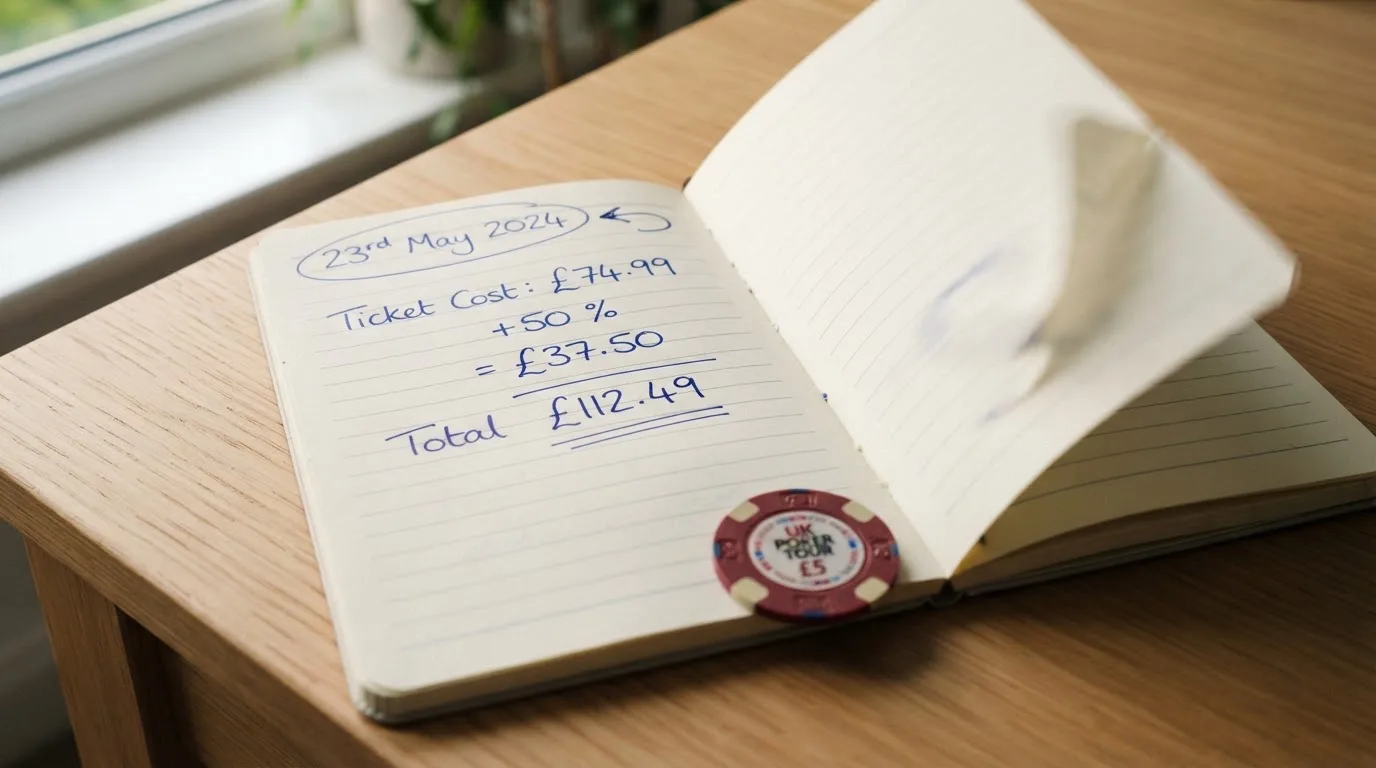
That last rule is what a reload bonus is in 2026. Before the cap, UK wagering multiples routinely ran from 35x to 65x the bonus; the headline figure on a reload offer was a marketing number, because the wagering underneath ate most of it. The 10x ceiling does not make the offer free. It makes the offer readable. A £50 bonus at 10x means £500 of qualifying play before any winnings land as withdrawable cash, and the reader of this page who thinks of a bonus as a gift has not yet read the second half of the sentence.
Two further terms sit on every reload the licensed brands reviewed below publish. A game weighting determines how much of each spin or hand counts towards the wagering target: slots usually contribute 100%, table games often 10% or zero, and live-dealer titles are frequently excluded entirely. A maximum bet during wagering — typically £5 — caps the size of any single spin that counts. Violate it and the bonus is forfeit, including the winnings it generated, which is why the figure is worth a reader’s attention even when the bonus itself looks modest.
The third term is the expiry window. A 30-day clock is common; some reloads run for seven. A bonus that has not been cleared inside the window is removed, and any winnings tied to it go with it. The expiry is the silent third party in any reload calculation: lengthen the wagering math by enough and the clock beats the player to the finish line. Two reloads with identical wagering can cost different amounts in real play because their windows are different.
The 10x cap, in numbers a player can use
The wagering cap that took effect on 19 December 2025 is the single change that has reshaped reload economics in the UK market. The arithmetic of a reload bonus is now a band rather than a single figure, because the bonus amount itself is whatever the operator names and the cap is a multiplier on that amount. To give the band shape, two examples from the band that licensed brands currently use:

A £20 bonus at the 10x cap requires £200 of qualifying wagering before withdrawals unlock. A £100 bonus at the same cap requires £1,000. The shape of the band is linear — twice the bonus, twice the wagering, twice the time — but the absolute size of the wagering target is set by the operator’s chosen bonus amount, not by the regulator. The cap stops the worst multiples from being published; it does not stop a small bonus from being published at a size a player can clear in a single short session.
The deposit minimum is the second variable. A reload of “50% up to £100, minimum deposit £20” turns into a £10 bonus on a £20 deposit and a £100 bonus on a £200 deposit. Players with a small bankroll should think of the minimum deposit as the floor of the offer: every pound under the floor returns no bonus at all, and every pound above the cap returns bonus at the percentage set but capped. The middle of the range — comfortably above the minimum, comfortably below the cap — is where the offer delivers the highest percentage of bonus per pound deposited. That midpoint is different for every reload and not always printed on the offer page.
The expiry and game weighting are the third pair. A reload with 100% slot weighting and a 30-day window is a different proposition from a reload with 50% weighting and a 7-day window at the same cap, because the second one needs twice the volume of qualifying play in a quarter of the time. None of these three — wagering cap, deposit floor, window — changes the headline percentage. All three change what it costs.
Deposits that qualify and the routes that no longer do
Reloads sit on top of a deposit, and the routes that can fund a gambling account in Great Britain are narrower than at most other consumer sites. Credit cards have been banned for gambling since 14 April 2020, including credit cards routed through e-wallets; the Commission’s estimate at the time was that around 800,000 UK consumers used credit cards to gamble in 2018, and that 22% of online gamblers who used credit cards were classed as problem gamblers — the figures that drove the ban. A player who tries to fund a reload with a credit card, directly or through an intermediary wallet, will be blocked at the cashier.
The routes that work are debit cards, bank transfers and a closed list of e-wallets and prepaid instruments. UK bank transfers typically run through the Faster Payments Service, launched in 2008 and operated by Pay.UK; most arrive instantly or within a couple of minutes, the scheme sets a £1,000,000 per-transaction ceiling, and individual banks impose their own lower limits. Apple Pay sits alongside debit cards as a tokenised front-end — a Device Primary Account Number replaces the real card number and a dynamic security code is generated for each transaction, with in-store authentication through a double-click on devices with Face ID or Touch ID; the brand launched on 20 October 2014, took UK-issued cards on 14 July 2015, and is operated by Apple Inc. AstroPay, founded in 2009 and headquartered in Uruguay, runs a UK entity — Larstal Limited — authorised by the Financial Conduct Authority under the Electronic Money Regulations 2011, alongside Isle of Man, Brazilian and Danish licences.
What matters for a reload is not the consumer-protection profile of the wallet. It is whether the licensed brand accepts it as a deposit route and whether deposits from that route qualify for the bonus. Several reload offers exclude Skrill and Neteller deposits from qualification — a legacy of e-wallet bonus abuse that operators introduced after the 2014 changes and have not dropped. A player who loads a reload with the wrong wallet gets the deposit credited but the bonus withheld, and that mismatch is the most common reason a reload “didn’t work” in player forums.
The minimum deposit is the next gate. A £10 minimum is the most common floor at UK-licensed brands; £20 appears on the larger-match reloads and on most reloads tied to a free-spins package. A deposit below the floor does not trigger the offer. A deposit above the floor but below the cap returns bonus at the percentage but in a smaller absolute number than the cap suggests — a “100% up to £200” on a £50 deposit returns £50 of bonus, not £200.
The licensed landscape the page reads against
The Gambling Commission’s public register listed 139 businesses holding an active remote casino operating licence on 18 September 2026; the register is searchable online and downloadable in full as CSV or Excel files. The register’s domain list records each website against the licence account that runs it, with a status of Active, Inactive or White Label, and on 18 September 2026 it held 1065 active and 361 white-label domain entries — a white-label site trades under another company’s licence. A licence number has the form Account-R-Number-Suffix, where the leading six digits repeat the licence holder’s account number and the “R” marks a remote (online) licence.
That register is the entire test of whether a brand is licensed. There is no “approved operator” badge from a trade body that runs alongside it, and no industry kitemark that stands in for the Commission register. Any brand a UK player can deposit with must trace, through its domain, to a licence on this register — and the table below records exactly that chain for the ten brands this page reviews.
| Brand | Licence holder and GB remote casino licence | Domain status on the register | Reload bonus support |
|---|---|---|---|
| Paddy Power | PPB Games Limited (account 39411), 039411-R-319335-010 | Paddy Power listed as Active | — |
| Ladbrokes | LC International Limited (account 54743), 054743-R-330863-014 | Ladbrokes listed as Active | — |
| MrQ | Tek Fox Ltd (account 60629), 060629-R-337532-004 | MrQ listed as Active | — |
| Coral | LC International Limited (account 54743), 054743-R-330863-014 | Coral listed as Active | — |
| bet365 | Hillside (UK Gaming) ENC (account 55149), 055149-R-331499-004 | bet365 listed as Active | — |
| Betfred | Petfre (Gibraltar) Limited (account 39544), 039544-R-319290-010 | Betfred listed as Active | — |
| Casumo | Recro Limited (account 61549), 061549-R-336718-002 | Casumo listed as Active | — |
| 888casino | 888 UK Limited (account 39028), 039028-R-319297-014 | 888casino listed as Active | — |
| Jackpotjoy | Gamesys Operations Limited (account 38905), 038905-R-319430-022 | Jackpotjoy listed as Active | — |
| Gala Bingo | LC International Limited (account 54743), 054743-R-330863-014 | Gala Bingo listed as Active | — |
Three rows share the same licence number — Ladbrokes, Coral and Gala Bingo all sit under LC International Limited — which means the Commission’s regulatory attention on the three brands is the attention of a single account, not three. A complaint about one is a complaint the regulator already holds on the others. The three brands are not independent operators; they are three fronts to the same licensee, and any player comparing them is comparing skin, not book. Two other licences in the table sit outside the UK: Betfred’s licence holder is Petfre (Gibraltar) Limited, and Hillside (UK Gaming) ENC, the entity behind bet365, is incorporated in the Isle of Man. Both are listed as active on the GB remote register, and both have full Commission oversight for British customers; the offshore incorporation is a corporate choice that has no bearing on what the player gets in complaints and dispute resolution.
No row in the table attaches to a reload bonus offer. The Commission’s register is a record of who may take a deposit; it does not publish what each brand currently pays as a reload promotion, and any comparison of reload offers between brands must come from each brand’s own promotions page. The brands in the table are the brands a UK player can deposit with under a GB remote licence, full stop. The reload mechanics are layered on top of that licence.
The rules the licence carries with it
A GB remote casino operating licence is not only the right to take deposits. It is a bundle of obligations under the Gambling Act 2005 — which covers Great Britain (England, Scotland and Wales), not Northern Ireland — and the Gambling (Licensing and Advertising) Act 2014, which requires any operator taking customers in Great Britain to hold a Commission licence wherever it is based. A Curaçao, Maltese or Gibraltar licence is not a substitute; offshore brands serving British customers without a Commission licence are operating illegally under section 33 of the Gambling Act 2005. The Commission disrupts illegal sites through cease-and-desist notices, search-engine delisting, payment and hosting referrals, but has no ISP-blocking power, and the protection the player loses by playing offshore is the whole point: no GAMSTOP, no Commission complaints route, no approved ADR.
Age verification has been required since 7 May 2019, before the first deposit or any play. Name, address and date of birth are checked; the verification is not optional and not a soft preference, and anonymous play is not possible at a licensed site. Every online licence in Great Britain also requires GAMSTOP enrolment as a condition: the national online self-exclusion scheme, mandatory since 31 March 2020, with periods of six months, one year or five years that cannot be cancelled early. The reload bonus is only available once GAMSTOP and the age checks are already satisfied, and a player on a self-exclusion period will not see one.
Online slots carry a maximum stake per game cycle, as set out in the following table:
| Age Group | Max Stake per Spin |
|---|---|
| 18–24 | £2 |
| 25 and over | £5 |
Auto-play has been banned since 31 October 2021, a slot spin may not be faster than 2.5 seconds, and losses disguised as wins are banned. There is no state-set deposit or loss ceiling; the obligation on operators is to prompt a customer to set a financial limit before the first deposit, in force from 31 October 2025. Financial vulnerability checks run at £150 net deposits in a rolling 30 days from 28 February 2025, using public data only; the wider financial risk assessments are announced but not yet in force. Players pay no tax on gambling winnings in the UK; operators pay Remote Gaming Duty, raised from 21% to 40% from 1 April 2026, which is the operator’s line, not the player’s.
Two Commission changes sit closest to reload economics. The 10x wagering cap from 19 December 2025 is the structural one — the multiplier that makes the rest of this page arithmetic rather than marketing. The credit-card ban from 14 April 2020 is the payments one, and the 22% problem-gambler rate among credit-card-using online gamblers that the Commission cited at the time is the figure that explains why the ban covers credit cards routed through e-wallets too.
Reload offers at the ten licensed brands reviewed
The brands below each hold an active GB remote casino operating licence and are listed on the Commission’s register as described in the table above. The reload mechanics that follow come from each brand’s own promotions terms; the licence data is the regulator’s. Two reloads at the same percentage match can have very different real costs, and the second half of each write-up is the part of the offer that does not fit on a banner.
Paddy Power
Paddy Power is the consumer-facing brand of PPB Games Limited under Commission account 39411, with Paddy Power listed as active on the public register against remote casino licence 039411-R-319335-010. The brand runs on the Paddy Power retail and digital stack, and reload promotions are tied to the sportsbook-casino crossover that the Flutter group has built around the brand. The reload terms follow Flutter’s standard game weighting — slots at 100%, most table games at 10% or excluded — with a maximum bet during wagering that tracks the £5 stake ceiling the Commission sets for players aged 25 and over. A returning depositor who plays slots only and stays under the £5 per-spin cap will clear a reload in roughly the time the wagering math says; a player who takes the bonus onto a roulette table will see the wagering target double, treble, or stop counting entirely, depending on the table.
The reload offer on Paddy Power suits a returning sportsbook customer who plays slots at modest stakes between football weekends. The bonus is not a casino headline; the casino is a side door to a sportsbook account that has been depositing for years. A player whose only relationship with Paddy Power is the casino reload should compare it against the brands below, because the offer rewards cross-product activity, not pure casino play.
Ladbrokes
Ladbrokes sits under LC International Limited, account 54743, with Ladbrokes.com listed as active on the register against remote casino licence 054743-R-330863-014. The same licence covers Coral and Gala Bingo — three consumer brands, one regulated entity — and a player who holds accounts at all three is interacting with the same licensee three times over. Reload promotions at Ladbrokes run on the LC International platform and inherit the group’s standard bonus terms; the 10x cap has been absorbed into the platform’s offer templates without changing the percentage match on display.
The reload at Ladbrokes is for a returning player who already has a Coral or Gala Bingo account and wants to spread deposits across the group without losing access to the same promotions. The shared licence is a real point of comparison: a complaint is filed once and runs through the whole account, and the LC International responsible gambling tools — deposit limits, time-out, GAMSTOP enrolment — apply identically across the three brands. A player who wants three separate regulatory relationships will not find them here.
MrQ
MrQ runs on Tek Fox Ltd, Commission account 60629, with Mrq.com listed as active against remote casino licence 060629-R-337532-004. The brand is one of the smaller independents in the licensed set — its licence holder is Tek Fox Ltd, not a major group — and its promotions have historically been lighter than the larger brands’. MrQ runs a “no wagering” house policy on some promotions; the reload terms on the site should be checked at the time of deposit, because the bonus wording differs between offers and the 10x cap does not require any reload to carry wagering at all. A £10 bonus with no wagering requirement is withdrawable as cash on completion of any 1x deposit playthrough the brand sets.
The reload at MrQ suits a player who has decided that any wagering multiple above zero is the cap they want. The brand’s marketing has long leaned on the simplicity of cash-only bonuses, and the reload programme reflects that. A returning player with a small bankroll gets the cleanest read on what they are being paid, because the math is deposit plus bonus with no multiplier attached.
Coral
Coral shares LC International Limited with Ladbrokes and Gala Bingo, against the same remote casino licence 054743-R-330863-014, with coral.co.uk listed as active on the register. The reload terms are issued from the same LC International platform as Ladbrokes, with the same game weighting, the same maximum bet during wagering, and the same 10x cap absorbed into the offer template. A player who has held a Ladbrokes account in the past and has now moved to Coral has not changed the regulated entity; the same customer due diligence, the same financial vulnerability checks at £150 net deposits in a rolling 30 days, and the same GAMSTOP confirmation run before the reload appears.
The reload at Coral is for a returning player who wants the LC International promotions under a sports-leaning brand. Coral and Ladbrokes were rivals in the UK retail bookmaking trade before the merger, and the casino reload on each side has historically tracked the other. A player choosing between them on reload value alone is choosing between two equivalent promotions issued by the same licensee; the deciding factor is the brand the player already has an account with.
bet365
bet365’s domain is listed on the Gambling Commission register under operating licence 055149-R-331499-004. The brand is the largest in the licensed set by customer volume and operates the deepest product catalogue. bet365’s reload programme runs on its own platform rather than a shared white-label, and the bonus terms reflect the in-house engineering: a wide game weighting chart, a full exclusions list, and a wagering multiplier that has tracked below the 10x cap since the rule took effect. The brand’s own promotional emails are the most reliable source of the current reload, because the offer rotates frequently and the on-site promotions page can lag a day behind the email schedule.
The reload at bet365 is for a player who values a deep catalogue and a stable platform over headline bonus size. bet365’s edge is execution: withdrawals through Faster Payments, a cashier that does not reject UK debit cards, and a promotions engine that has historically delivered what its terms page promises. A player chasing the largest percentage match will find larger numbers at smaller brands; a player chasing the offer with the fewest surprises will find it here.
Betfred
Betfred sits under Petfre (Gibraltar) Limited, Commission account 39544, with Betfred.com listed as active against remote casino licence 039544-R-319290-010. The licence holder is Gibraltar-incorporated, which is a corporate choice without effect on the player’s protection; the GB remote licence is the operative permission for British customers. Betfred’s reload programme runs on the in-house Petfre platform, with bonus terms that follow the group’s own templates rather than a white-label stack. Game weighting leans toward slots and scratch cards; table games and live casino are reduced or excluded, and the maximum bet during wagering tracks the Commission’s £5 stake ceiling for over-25s.
The reload at Betfred is for a returning player who already has a sportsbook account on the brand and treats the casino as a side product. The bonus is paid out in a way that rewards slot play; a roulette or blackjack player taking the same bonus will see the wagering target move slowly. A player who plays a mix of products should check the game weighting chart on the offer page before depositing.
Casumo
Casumo sits under Recro Limited, Commission account 61549, with Casumo.com listed as active against remote casino licence 061549-R-336718-002. Recro is a Malta-headquartered group with a GB-licensed entity, and Casumo’s product has historically run on the group’s own platform rather than a white-label. The reload terms follow the Recro template: a clean bonus page, a clearly stated game weighting chart, and a 10x cap absorbed into the offer. Casumo’s player-engagement model is built around the loyalty programme rather than the headline reload, and a returning depositor who is not in the loyalty loop is leaving value on the table.
The reload at Casumo is for a player who values the loyalty programme as much as the headline bonus. The reload is the front door; the recurring value is in the loyalty tiers that follow. A player who treats the brand as a deposit-and-go site will get the reload and miss the rest; a player who treats it as a recurring account will see the reload as the entry point to a longer structure.
888casino
888casino sits under 888 UK Limited, Commission account 39028, with 888casino listed as active against remote casino licence 039028-R-319297-014. The 888 group has one of the longer track records in the licensed UK market, and 888casino’s reload programme has historically been among the more generous in percentage terms. The bonus terms follow the 888 UK template, with a wide game weighting and a maximum bet during wagering that tracks the Commission’s stake ceiling. The reload rotates; the percentage match on the current offer is on the brand’s promotions page rather than the licence record.
The reload at 888casino is for a returning player who wants the largest percentage match among the licensed independents in this list. The brand’s marketing has leaned on reload generosity for years, and the offer has not been thinned out by the 10x cap. A player who reads the headline number and ignores the game weighting will overstate the value; a player who reads the chart will find a competitive reload at a clean wagering multiple.
Jackpotjoy
Jackpotjoy sits under Gamesys Operations Limited, Commission account 38905, with Jackpotjoy.com listed as active against remote casino licence 038905-R-319430-022. Gamesys runs a bingo-led platform with a casino vertical alongside, and the reload programme reflects the bingo roots: a focus on slot and bingo game weighting, a maximum bet during wagering that tracks the Commission’s stake ceiling, and a 10x cap absorbed into the offer. The reload at Jackpotjoy rotates between casino-only and casino-plus-bingo variants; the current offer is on the brand’s promotions page.
The reload at Jackpotjoy is for a returning player who plays bingo as well as slots and wants the offer to cover both. The brand’s edge is the bingo integration; the reload is at its strongest when the player uses the bonus on the bingo side as well as the slot catalogue. A player who treats the brand as a pure casino will find a competitive reload without the bingo uplift.
Gala Bingo
Gala Bingo is the third LC International brand in this list, sharing remote casino licence 054743-R-330863-014 with Ladbrokes and Coral, with Gala Bingo listed as active on the register. The reload programme runs from the same LC International platform as the other two, with the same game weighting, the same maximum bet during wagering, and the same 10x cap absorbed into the offer template. A player who has moved from Gala Bingo to Ladbrokes, or from Coral to Gala Bingo, is interacting with the same bonus terms under a different logo.
The reload at Gala Bingo is for a returning bingo player who treats the casino vertical as a side product. The offer rewards bingo and slot play; table games are de-weighted or excluded. A player who plays roulette or blackjack on a Gala Bingo reload will see the wagering target move slowly. A player who plays the bingo and slot catalogue the brand is built around will see the offer work as written.
Reload bonuses and the player who needs to budget carefully
Reload bonuses are repeat-deposit incentives, which is the regulatory framing as well as the marketing one. The Gambling Commission’s responsible gambling code requires operators to prompt a customer to set a financial limit before the first deposit — in force from 31 October 2025 — and the GAMSTOP enrolment that is mandatory for every online licence means a player on a self-exclusion period will not see a reload at all. The reload is only offered to a player whose account is open, in good standing, and verified.
The mechanism that makes reloads a budgeting concern is the deposit pattern they incentivise. A welcome bonus is a one-off; the player deposits once, plays the welcome package, and the offer is spent. A reload bonus is a recurring offer; the player is invited to deposit again on a specific day, at a specific minimum, in return for a percentage match. The player who would not have deposited on that day, and who deposits because the reload is there, is the player the offer is built for, and the offer does not make that deposit free. The bonus is paid in wagering credit, not in cash, and the player has cleared the wagering before the deposit becomes withdrawable again.
The financial vulnerability checks that run at £150 net deposits in a rolling 30 days, in force from 28 February 2025 and using public data only, are the operator’s gate on the same pattern. The check is not a soft prompt; it is a Commission-mandated affordability review that may pause deposits while the operator works through the data. The wider financial risk assessments that have been announced are not yet in force; the £150 threshold is the one in operation today. A player who hits the threshold on a reload cycle will be reviewed, and the review is not optional from the player’s side.
The support services that sit alongside the licensed brands are listed on every responsible gambling page: GAMSTOP for self-exclusion, the National Gambling Helpline run by GamCare, and GambleAware for information and referral. A player who feels the reload cycle is pushing the budget should set a deposit limit before the next reload lands; the operator must honour it, and the limit applies across the brand’s products rather than just casino. The protection that comes with the licence is the reason the licence is on the table. A reload bonus at an unlicensed site has none of it.
The offshore alternative, and what it does not have
The brands reviewed above are licensed under the Gambling Act 2005 and listed on the Commission’s public register. Any brand not on the register, and serving customers in Great Britain, is operating illegally under section 33 of the Gambling Act 2005 — including Curaçao-licensed and Malta-licensed operators without a Commission licence. The Commission disrupts illegal sites through cease-and-desist notices, search-engine delisting, payment-block referrals and hosting-block referrals, but has no ISP-blocking power. The penalties do not reach the player; the player does not get a Commission complaints route or an approved ADR on an unlicensed site, and GAMSTOP enrolment is not enforced there.
A reload bonus at an unlicensed site is offered without the 10x cap, without the credit-card ban, without GAMSTOP, and without the financial vulnerability check at £150 net deposits. The offer can look larger for that reason, and the absence of the rule is the offer. The protection the player loses — no Commission complaints route, no GAMSTOP confirmation, no ADR — is the protection the player is paying for without knowing it. An unlicensed site that accepts a deposit from a self-excluded British player is breaking the operator’s own obligations under the law that the licensed brands are following.
The Commission’s register is the test of whether a brand is licensed, and the table in the section on the licensed landscape lists the brands that pass it. A player comparing reload offers across the licensed and unlicensed markets is not comparing two offers; they are comparing an offer with a regulatory framework against an offer without one. The wagering multiple on the second is not the only thing that is higher.
Where the offer is heading in 2026
The 10x wagering cap that took effect on 19 December 2025 is the most significant structural change to UK reload economics in years, and the offer landscape has settled around it. The percentage matches at the licensed brands reviewed above have not collapsed; the headline numbers on most promotions are similar to the pre-cap range. What has changed is the size of the qualifying wagering underneath, and the player who reads the percentage match without reading the multiplier underneath is still reading the offer as marketing. The licensed brands have absorbed the rule without thinning the offers; the unlicensed brands have not absorbed it because it does not apply to them, and the gap between the two markets is one a player should see clearly before depositing.
The wider financial risk assessments that have been announced are not yet in force, and the £150 net-deposit financial vulnerability check is the active gate. Remote Gaming Duty has been raised from 21% to 40% from 1 April 2026, which is the operator’s line; the player pays no tax on winnings. The Commission’s domain register held 1065 active and 361 white-label entries on 18 September 2026, and the 139 businesses holding an active remote casino licence on the same date is the population the page reads against. A new brand entering the market, or an existing one tightening its reload terms, will be visible on the register first; the offer follows the licence, not the other way round.
The cost read against the offer
A reload bonus at a UK-licensed casino in 2026 is a percentage match, capped by the operator, with a 10x wagering ceiling that took effect on 19 December 2025. The player who reads the percentage without reading the multiplier underneath is reading the marketing; the player who reads both is reading the offer. A £20 bonus at the cap requires £200 of qualifying wagering; a £100 bonus at the cap requires £1,000. The middle of the offer — comfortably above the minimum deposit and comfortably below the cap — is where the bonus returns the highest percentage per pound deposited. The expiry window, the game weighting and the maximum bet during wagering are the three terms that change what the offer costs, and none of them appear in the headline number.
The ten licensed brands reviewed above each hold an active GB remote casino operating licence and are listed on the Commission’s public register as described in the table. Three of them share a single licence through LC International Limited — Ladbrokes, Coral and Gala Bingo — and a player holding accounts at all three is interacting with one regulated entity three times. The reload terms are brand-specific; the regulator’s oversight is not. Offshore brands serving British customers without a Commission licence are operating illegally under section 33 of the Gambling Act 2005, and the player loses the protection that comes with the licence when they deposit there.
The reload is the right offer for a returning player who has set a budget, checked the game weighting chart, and read the multiplier as carefully as the percentage. For every other player, the offer is a deposit they would not otherwise have made, dressed up as a gift.
Frequently asked questions about UK reload bonuses
What is a casino reload bonus and how does it differ from a welcome offer?
A reload bonus is a repeat-deposit incentive — a percentage match on a deposit made after the welcome package has been spent. A welcome offer is paid once, on the first deposit or across the first few; a reload is paid on deposits that follow, often on a specific day or in a specific window, and the player is invited to deposit to claim it.
How often can I claim a reload bonus at a UK casino?
It depends on the brand. Some reloads run weekly — a Friday free-spin drop, for example — and some are tied to a specific promotion window that opens a few times a year. The licensed brands reviewed above rotate their reloads on different cadences, and the current offer is on each brand’s promotions page rather than on a fixed schedule.
Do crypto-funded reload bonuses work the same way as card deposits?
Crypto reloads are not a separate bonus type at the GB-licensed brands reviewed above, and most licensed UK casinos do not run crypto-specific reload promotions because the player funding routes are narrower than at offshore sites. Where a brand does accept a crypto deposit, the reload terms — wagering cap, game weighting, maximum bet, expiry — are the same as on a debit-card deposit, because the Commission treats the bonus on its terms, not on the funding route.
What wagering requirement applies to reload bonuses under current UK rules?
Wagering requirements on reload bonuses at GB-licensed casinos are capped at 10x the bonus amount, in force from 19 December 2025. A £50 bonus at the cap requires £500 of qualifying wagering; a £100 bonus requires £1,000. The cap applies to the multiplier, not to the bonus size, which the operator still sets.
Is there a minimum deposit needed to unlock a reload bonus?
Yes. The minimum deposit is the floor of the offer, and a deposit below the floor returns no bonus. A £10 minimum is the most common floor at the licensed brands reviewed above; £20 appears on larger-match reloads. A deposit above the floor but below the percentage cap returns bonus at the set percentage in a smaller absolute number than the cap.
Can I withdraw reload bonus winnings straight away?
No. The wagering requirement — capped at 10x the bonus since 19 December 2025 — must be cleared first, and the bonus is forfeit if the maximum bet during wagering or the expiry window is breached. Some reloads at MrQ and similar brands carry no wagering at all, in which case the bonus is paid as cash on completion of the deposit; check the offer page for the current wording before depositing.